Appliance Leak Water Damage in Lilburn, GA
Washer hoses, dishwasher connections and ice maker tubes fail quietly and soak what sits beneath them. The drying team extracts the water and dries under cabinets, toe kicks and flooring without pulling more than it has to.
(888) 532-4616Get the kitchen leak dried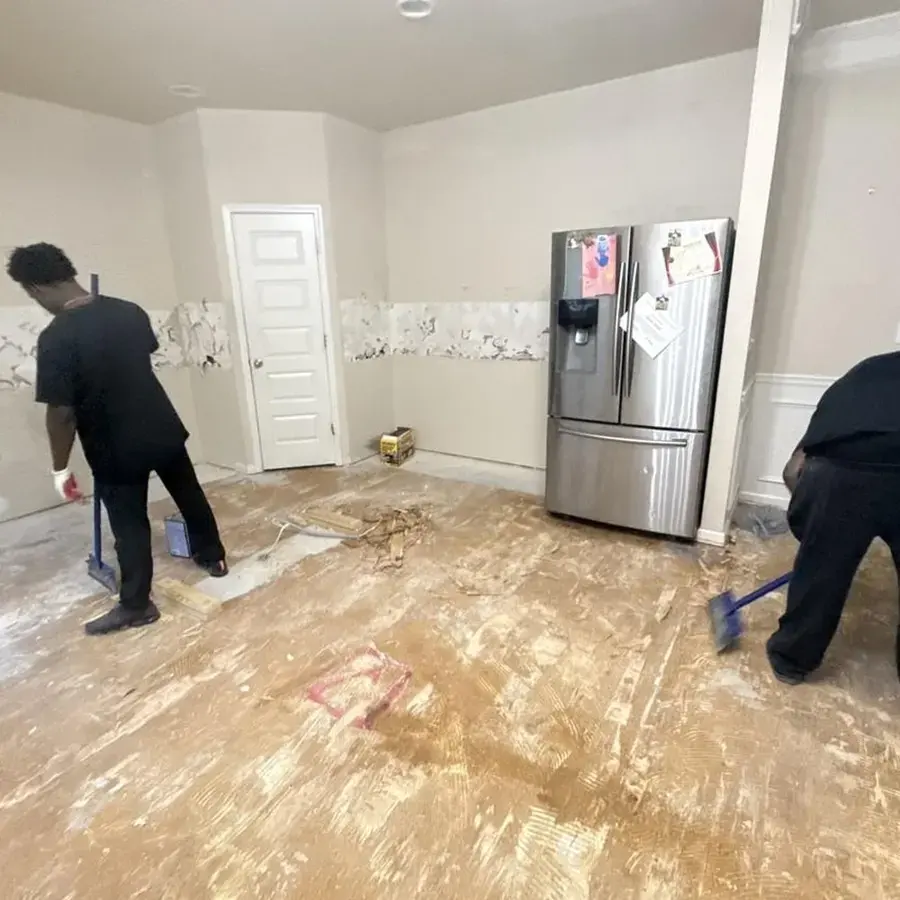
Appliance leaks are the quiet floods. A dishwasher supply connector or an ice maker tube can drip under the cabinets for weeks, and a washer hose can burst and run until someone gets home, soaking subfloor, cabinets and the ceiling below.
First steps for appliance leak water damage in Lilburn
- 1
Shut the appliance valve
Close the supply valve behind the washer, under the sink or behind the fridge.
- 2
Unplug the appliance
Disconnect power only if the outlet and floor around it are dry.
- 3
Pull towels, not cabinets
Soak up surface water, but leave cabinets in place for the drying team.
- 4
Photograph the failed part
Keep the broken hose or connector and photograph the wet areas.
What does appliance leak water damage cost in Lilburn, GA?
In Lilburn, GA, appliance leak water damage typically runs $500 to $12,000, depending on how long the leak ran, whether it reached hardwood, cabinets or the level below, and how fast drying started.
Small kitchen or laundry leak
- Extraction
- Toe-kick drying
- Daily readings
Under cabinets and hardwood
- Hardwood drying mats
- Cabinet cavity drying
- LGR dehumidifier
Long-running or two levels
- Ceiling below opened
- Flooring removal
- Extended drying
Ranges are typical, not a quote: category of water, square footage, material class and how fast drying started move the number most. Run the Lilburn water damage cost calculator for a closer range.
How appliance leak water damage is handled in Lilburn
The tech who does the walkthrough maps moisture before any equipment goes down, so the drying plan matches what is actually wet. Equipment stays until the readings say dry, not until it looks dry.
- 1
Map under the cabinets
Meters along cabinet bases, flooring and the ceiling below.
- 2
Extract
Surface water and carpet extracted, toe kicks removed where needed.
- 3
Dry in place
Cavity drying and hardwood mats save cabinets and flooring where readings allow.
- 4
Verify
Readings logged until subfloor, cabinets and flooring match the dry reference.
The appliances that leak most
Rubber washing machine hoses harden and split with age. Dishwashers leak at the supply connector and the drain hose. Refrigerators with ice makers rely on a thin plastic tube that cracks when the fridge is moved. In Lilburn's split-level homes, laundry rooms often sit right over finished rooms, so a washer leak shows up as a ceiling stain one floor down.
- Washer supply hoses: replace rubber with braided steel every five years or so.
- Dishwasher connectors and drain hoses under the sink.
- Ice maker and water filter tubing behind the refrigerator.
Drying under cabinets and floors
Water under a kitchen spreads beneath cabinets and into the toe kicks, where nobody can see it. The tech who does the walkthrough maps moisture along the cabinet bases and the floor, and the drying team removes toe kicks or drills small holes to push dry air into the cavities rather than pulling cabinets. Hardwood floors get drying mats that pull water up through the boards, which often saves flooring that looks ruined.
- Dishwasher drain water is Category 2 and gets antimicrobial treatment.
- Cupped hardwood often flattens when dried quickly and evenly.
- The ceiling below a laundry room is checked with meters; see ceiling leak water damage.
Leaks that run for weeks
Policies often treat sudden failures and slow, repeated leaks differently, which is why timestamped photos, the moisture map and the drying logs matter. Coverage depends on your policy, so check with your own insurer. The Consumer Product Safety Commission posts appliance recalls, and the EPA mold page explains why water left under cabinets becomes a mold problem within days. Larger spills are covered on the water extraction page.
Appliance leak water damage across Lilburn and southern Gwinnett
The Lilburn restoration crew covers ZIP 30047 and 30048, from Old Town Lilburn and the Camp Creek Greenway out along Killian Hill Road, Rockbridge Road and Five Forks Trickum Road.
Nearby coverage reaches Mountain Park, Stone Mountain, Snellville, Tucker, Lawrenceville, Norcross, Grayson.
Related water damage services in Lilburn
Appliance Leak Water Damage questions in Lilburn, GA
Do kitchen cabinets have to be removed?
Usually not. Removing toe kicks or drilling small holes lets the drying team push air under the cabinets. Cabinets come out only if they are swollen or the water was contaminated.
Can cupped hardwood be saved?
Often, if drying starts quickly. Drying mats pull water up through the boards, and many floors flatten as they dry.
How often should washer hoses be replaced?
Rubber hoses should be replaced about every five years. Braided steel hoses last longer and fail less often.
Is dishwasher water contaminated?
Water from the drain side is Category 2 because it carries food waste and detergent, so surfaces get cleaned and treated.
How long does drying under a kitchen take?
Most appliance leaks dry in 3 to 5 days. Hardwood and leaks that ran for weeks take longer.
Will insurance cover a leak that ran for weeks?
Long-running leaks are often treated differently from sudden ones. Coverage depends on your policy, so check with your own insurer.
Washer or dishwasher leaked? Get the floor dried.
Water under cabinets and hardwood does not show until it is a bigger problem. The drying team finds it with meters.
(888) 532-4616Lilburn kitchen leak drying, 24/7