Basement Flooding Cleanup in Lilburn, GA
Lilburn's sloped lots and red clay push storm water against basement walls until it finds a way in. The restoration team pumps the basement out, dries block, framing and flooring, and documents every reading.
(888) 532-4616Pump the basement out now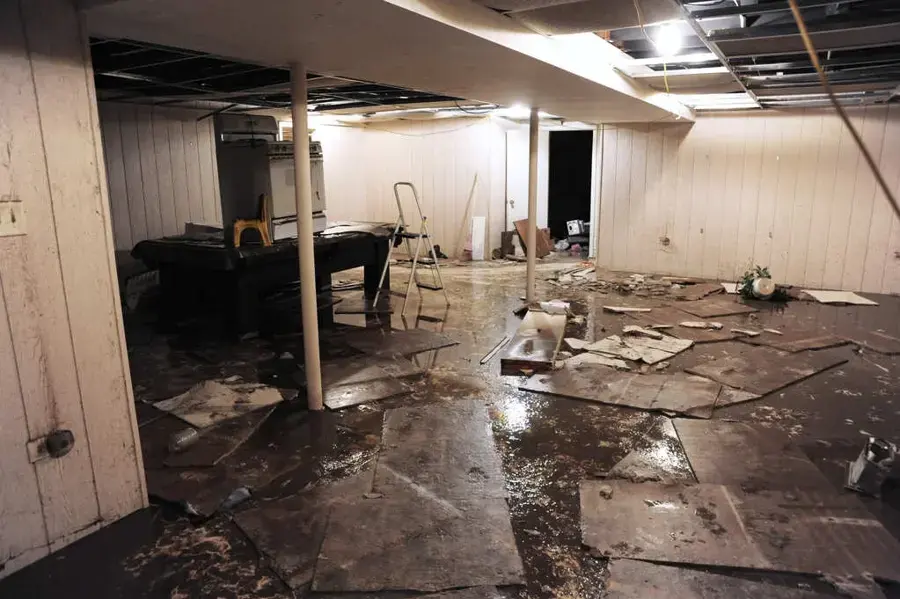
Basements are where Lilburn water damage collects. Split-level and basement ranch homes along Rockbridge Road, Arcado Road and the streets around Lilburn City Park sit on slopes, and the downhill wall of the basement takes the most water pressure in a hard rain.
First steps for basement flooding cleanup in Lilburn
- 1
Stay off wet stairs and outlets
Do not walk into standing water near outlets, a furnace or a water heater.
- 2
Cut power if safe
Turn off basement circuits only if the panel sits on dry ground.
- 3
Photograph the high-water mark
Document the water depth on walls and stored items before moving anything.
- 4
Lift boxes and rugs
Get stored items, rugs and electronics up and out, then call for extraction.
What does basement flooding cleanup cost in Lilburn, GA?
In Lilburn, GA, basement flooding cleanup typically runs $1,500 to $20,000, depending on the water category, the square footage that got wet, whether the basement is finished and how fast drying started.
Unfinished, clean seepage
- Pump-out and extraction
- Air movers and LGR dehumidifier
- Daily readings
Finished basement
- Carpet and pad extraction
- Flood cuts where meters say
- Wall cavity drying
Large or contaminated
- Category 3 protocol
- Porous material removal
- Desiccant drying on block
Ranges are typical, not a quote: category of water, square footage, material class and how fast drying started move the number most. Run the Lilburn water damage cost calculator for a closer range.
How basement flooding cleanup is handled in Lilburn
The tech who does the walkthrough maps moisture before any equipment goes down, so the drying plan matches what is actually wet. Equipment stays until the readings say dry, not until it looks dry.
- 1
Pump-out
Standing water pumped and extracted, then carpet and pad pressed out with weighted wands.
- 2
Find hidden water
Thermal imaging and meters check paneling, drywall, bottom plates and the slab.
- 3
Open only what is wet
Flood cuts and insulation removal happen only where the readings point.
- 4
Dry block, wood and slab
LGR and desiccant units run until every material meets the dry reference.
Why Lilburn basements take on water
Georgia Piedmont red clay drains slowly. In a heavy thunderstorm the soil around a foundation saturates, then pushes water through block joints, the cove joint where wall meets slab, and any crack in the floor. That is hydrostatic pressure, and it explains why a basement can flood with no plumbing failure at all.
- Downspouts that dump next to the foundation load the clay right where the wall is weakest.
- Block walls hold water in their cores and keep releasing it after the storm passes.
- A failed or overwhelmed sump pit turns seepage into standing water; see sump pump failure cleanup.
How a flooded basement gets dried
The extraction crew pumps out standing water first, then extracts carpet and pad. Finished basements often hide water behind paneling and drywall, so the tech who does the walkthrough uses thermal imaging and meters to decide where a flood cut is needed, usually a short cut along the bottom of the wall rather than a full tear-out. Block walls and slabs dry slowly, so LGR dehumidifiers run alongside air movers, and dense materials sometimes need desiccant drying.
- Groundwater seepage is usually Category 2; water that crossed soil, mulch or a yard can be treated as Category 3.
- Wet insulation behind finished walls comes out because it will not dry in place.
- Readings continue daily until wall, framing and slab match the dry reference.
Keeping the next storm out
Once the basement is dry, the most useful changes are outside: extend downspouts, regrade so the clay slopes away from the house, and keep the sump discharge clear. The basement and crawl space seepage risk check walks through those points. Coverage for seepage varies widely between policies, and surface flooding usually needs a separate policy, so it is worth reading the Ready.gov flood page and checking with your own insurer.
Basement flooding cleanup across Lilburn and southern Gwinnett
The Lilburn restoration crew covers ZIP 30047 and 30048, from Old Town Lilburn and the Camp Creek Greenway out along Killian Hill Road, Rockbridge Road and Five Forks Trickum Road.
Nearby coverage reaches Mountain Park, Stone Mountain, Snellville, Tucker, Lawrenceville, Norcross, Grayson.
Related water damage services in Lilburn
Basement Flooding Cleanup questions in Lilburn, GA
Why does my basement flood when no pipe broke?
Saturated red clay pushes water through block joints and the cove joint at the base of the wall. That hydrostatic pressure builds in heavy rain even when the plumbing is fine.
Does the drywall have to come out?
Not always. Meters decide. Clean water caught early can often be dried in place; if insulation behind it is soaked, a flood cut along the bottom of the wall is usually enough.
How long does a basement take to dry?
Most finished basements dry in 4 to 7 days. Block walls and concrete slabs hold more water than wood framing, so they can take longer.
Is basement floodwater dangerous?
Water that crossed soil or the yard can carry bacteria and is treated as Category 2 or 3. Keep children and pets out until it has been extracted and cleaned.
Will a dehumidifier from the store be enough?
A household unit helps with humidity but cannot keep up with a flooded basement. Restoration-grade LGR dehumidifiers pull far more water per day.
What helps stop the next flood?
Long downspout extensions, grading that slopes away from the house and a working sump pump with a backup do the most good on Lilburn clay lots.
Water in the basement? Get the pump-out started.
Block walls and slabs hold water for days. The drying team starts the moment the standing water is gone.
(888) 532-4616Lilburn basement drying, 24/7