Water Damage Restoration Duluth, GA
Water damage restoration in Duluth, GA, at any hour. Most homes here date from the 1980s and 1990s, so the drying team pulls the water, dries the framing and records each reading for the claim.
(888) 532-4616Reach Duluth dispatch right nowZIP 30096 and 30097, plus Suwanee, Berkeley Lake, Downtown Duluth and Parsons Alley.
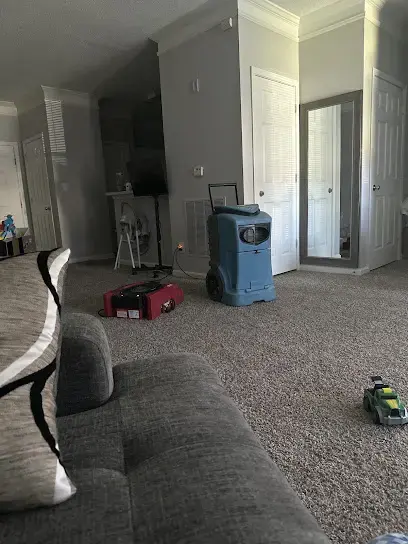
Water Damage Services Across Duluth, GA
Duluth losses run from a split washer hose in an apartment to storm water in a detached house. Start with the card that describes the water you are seeing.
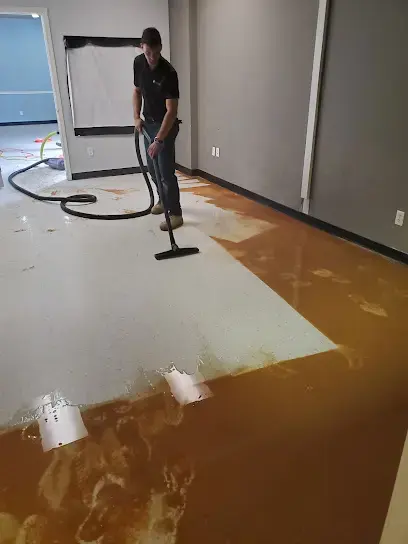
Water Extraction and Removal
Standing water from heavy Georgia rain or a failed pipe pulled out first so drying can begin.
See water extraction and removal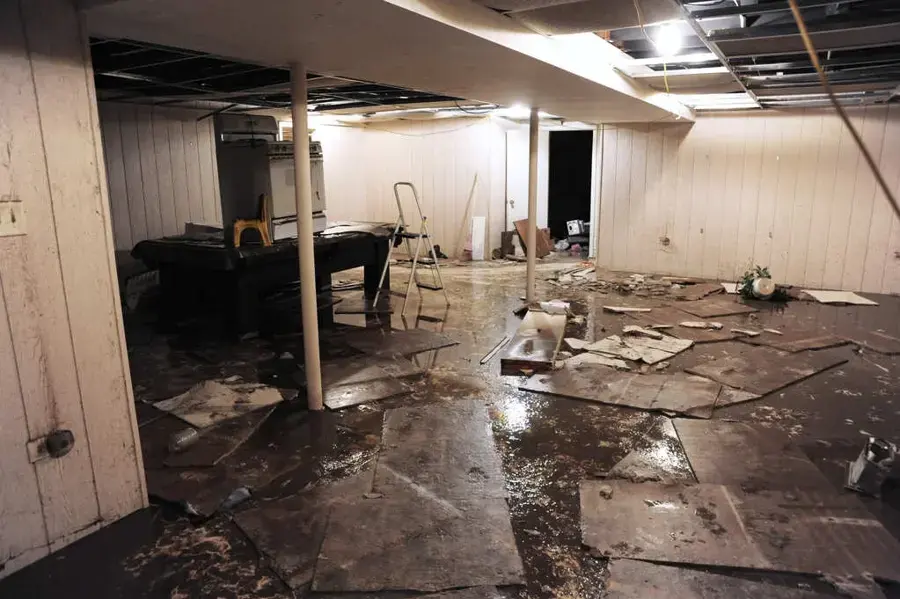
Basement Flooding Cleanup
Water in the lowest level of a house pumped out and dried until walls and flooring read dry.
See basement flooding cleanup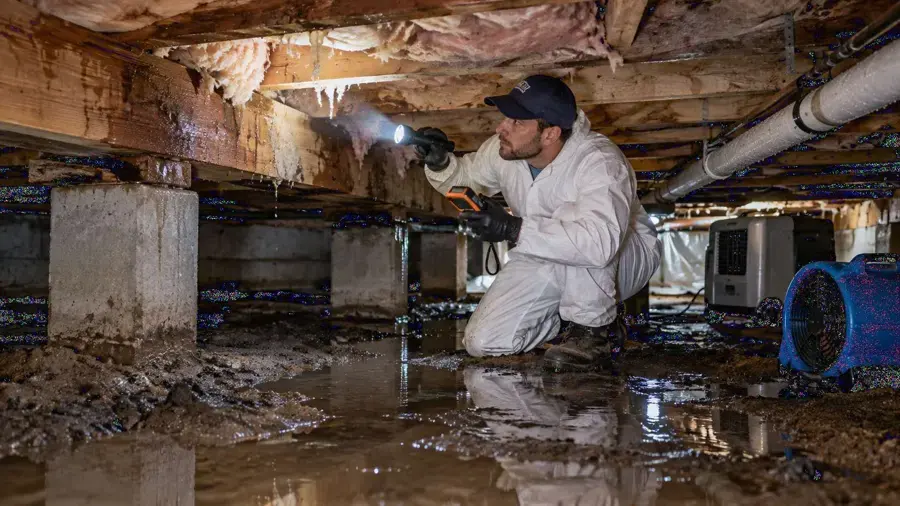
Crawl Space Water Damage
Standing water under a raised floor pumped out, the wet barrier removed and the joists dried.
See crawl space water damage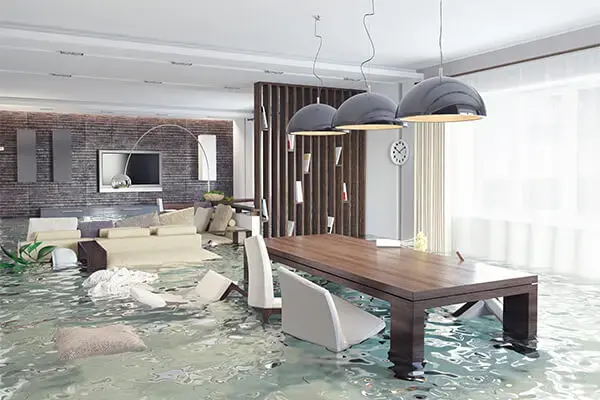
Storm and Flash Flood Cleanup
Flooding after a downpour treated as contaminated water, removed and cleaned, then dried to readings.
See storm and flash flood cleanup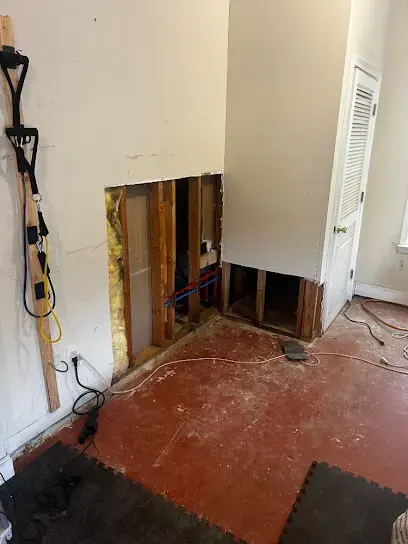
Burst Pipe Water Damage
A cracked pipe can release hundreds of gallons a day, so water is stopped, extracted and dried.
See burst pipe water damage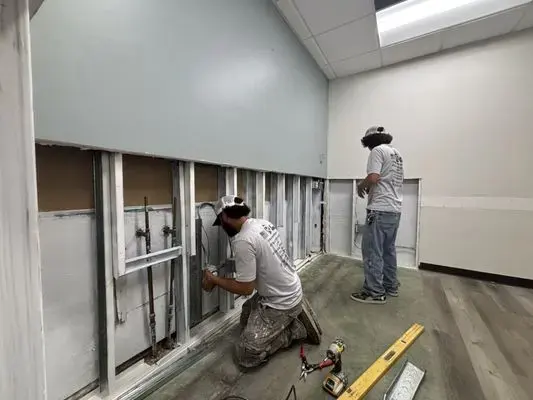
Frozen Pipe Cleanup
Rare Georgia freezes still split pipes; the breaks are found after the thaw and the walls dried.
See frozen pipe cleanup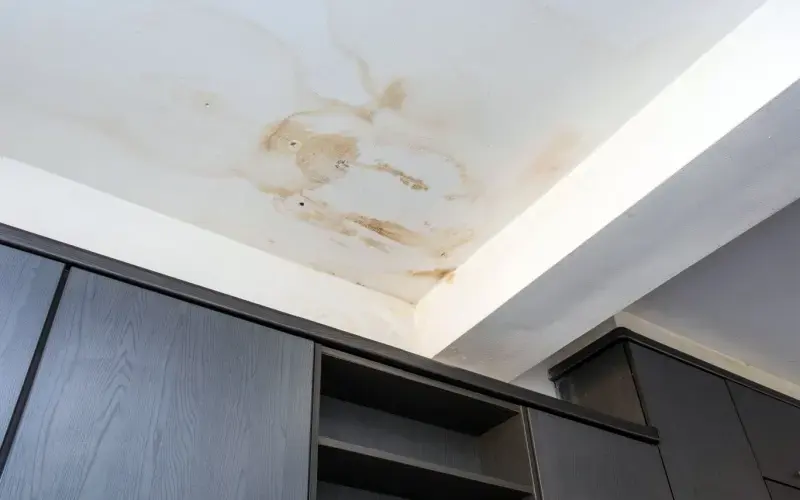
Ceiling Leak Water Damage
Leaks that drop in from the unit above, traced to the source and the ceiling dried.
See ceiling leak water damage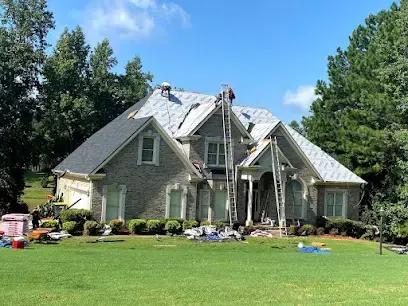
Roof Leak Water Damage
Storm openings in roofs tarped, wet attic insulation removed and the rooms below dried.
See roof leak water damage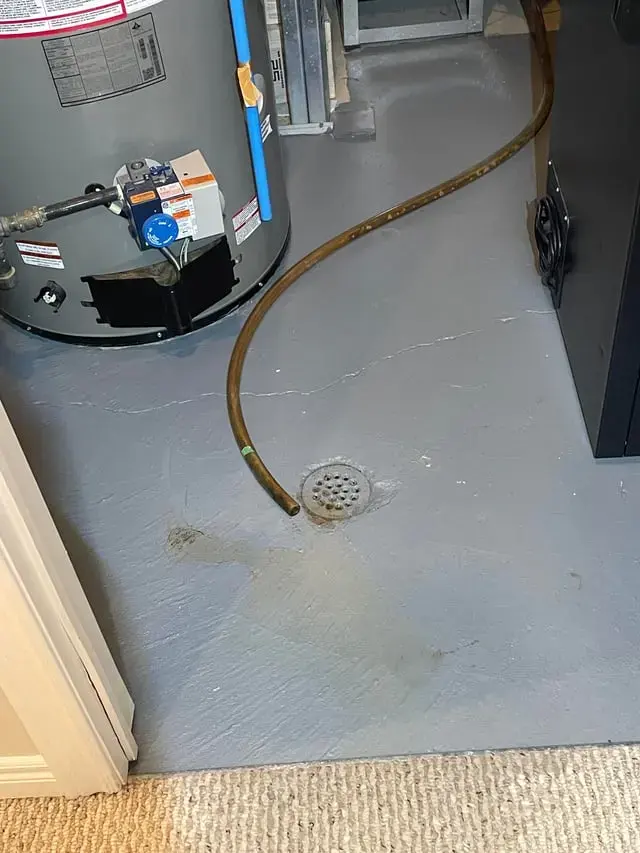
Water Heater Leak Cleanup
Tank failures in 1980s and 1990s homes extracted before water reaches the next room.
See water heater leak cleanup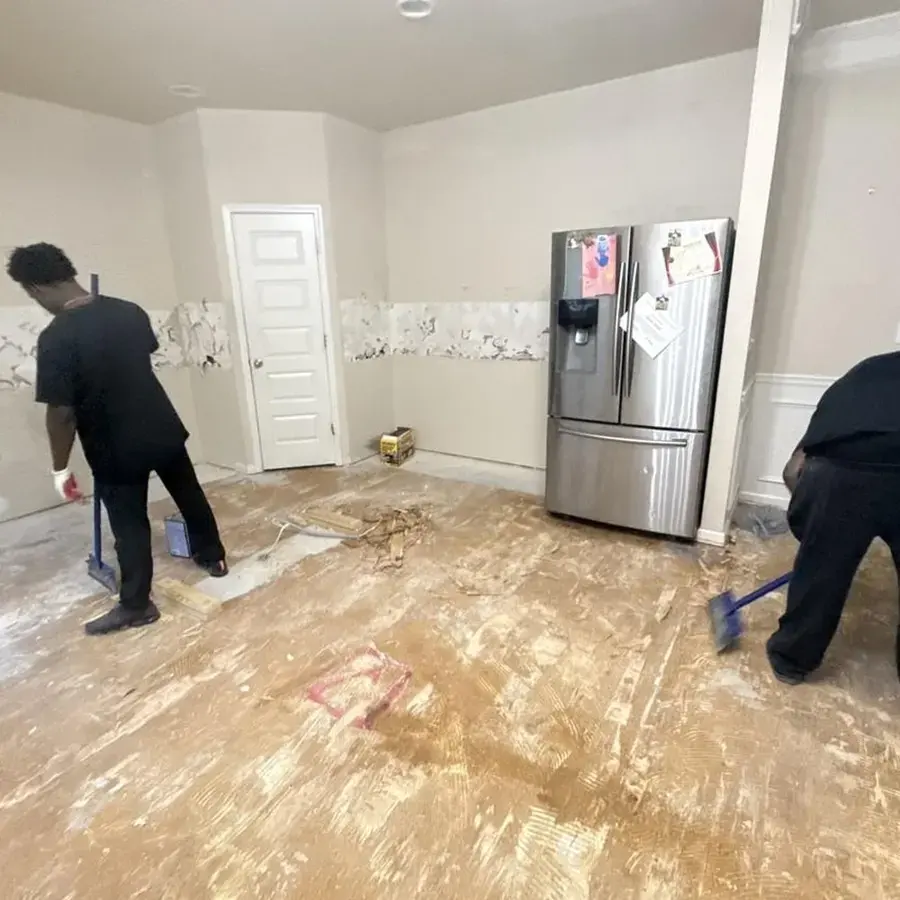
Appliance Leak Water Damage
Washer, dishwasher and refrigerator leaks dried beneath cabinets and in the units beside them.
See appliance leak water damage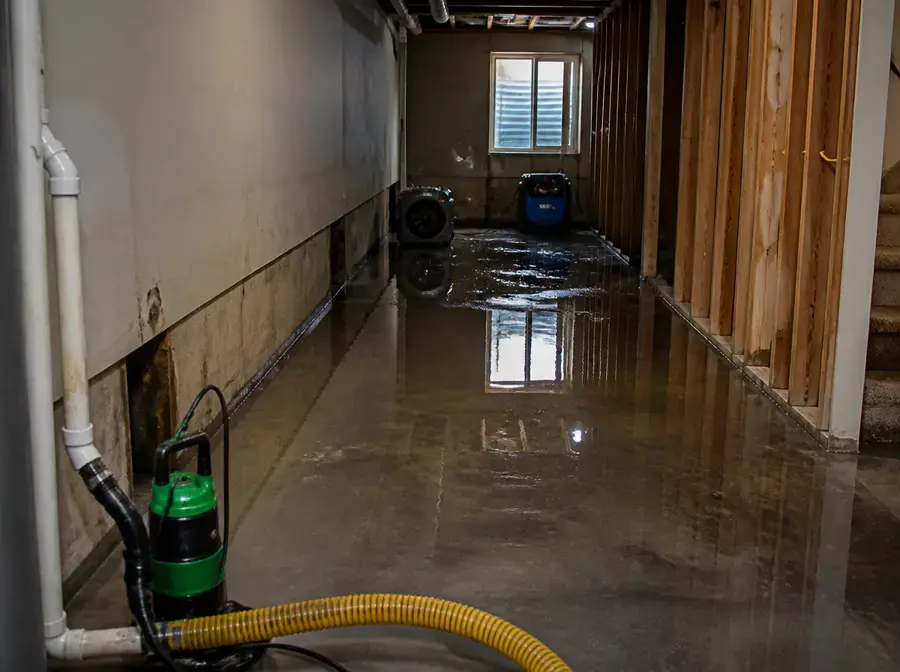
Sump Pump Failure Cleanup
Overflowing pits in the homes that have one pumped down, then the floor and walls dried.
See sump pump failure cleanup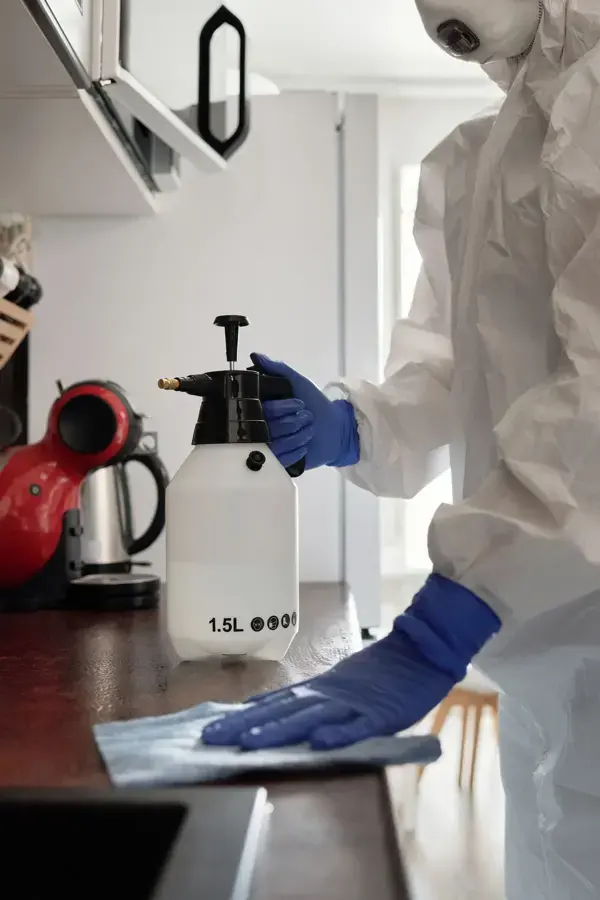
Sewage Backup Cleanup
Sewage from a backed-up drain sealed off, soaked porous materials hauled out and surfaces disinfected.
See sewage backup cleanup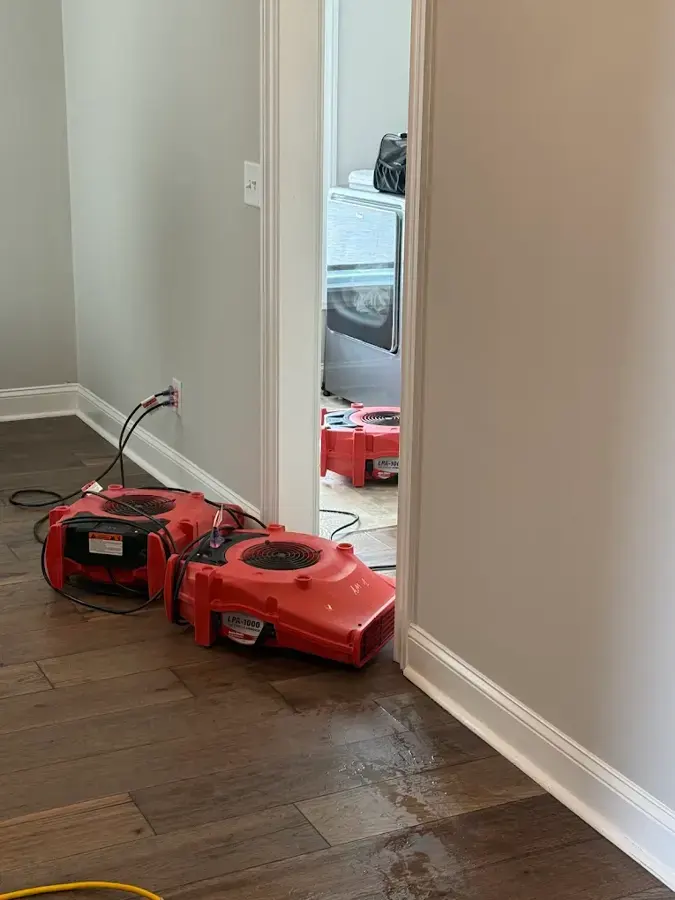
Structural Drying and Dehumidification
Wet studs, subfloor and slab dried on a daily meter schedule instead of by feel.
See structural drying and dehumidification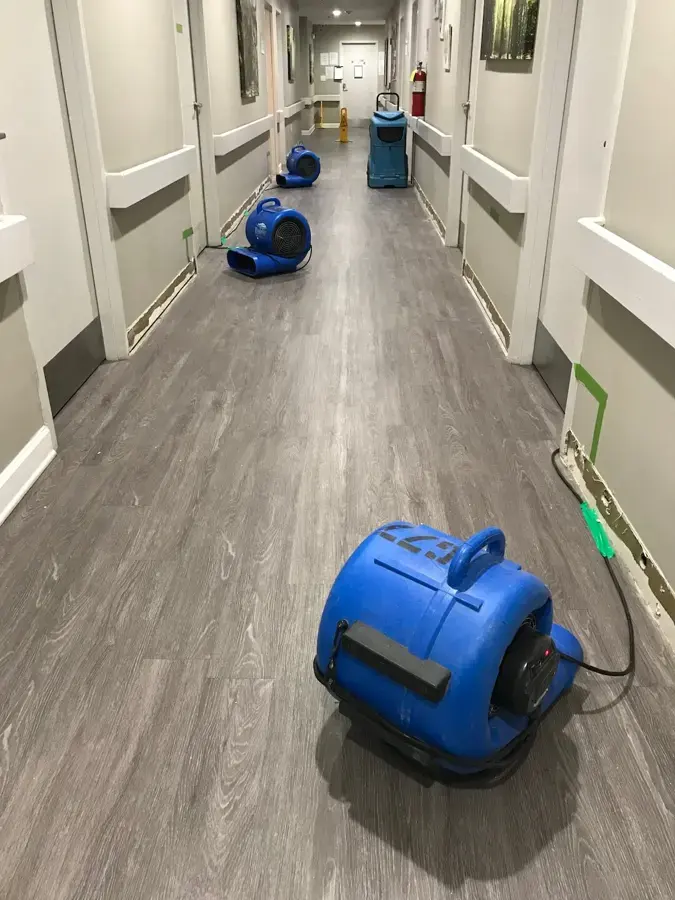
Commercial Water Damage
Offices, restaurants, plazas, hotels and apartment communities dried in phases so the rest keeps running.
See commercial water damageFive quick moves while water is still spreading
- 1
Stop the supply
Close the main or the fixture valve so water stops reaching the floors and walls.
- 2
Power down wet rooms
Switch off breakers for wet areas only if the panel is dry and easy to reach.
- 3
Stay out of the water
Keep everyone away from standing water near cords, outlets, a furnace or a water heater.
- 4
Take photos first
Shoot wide and close photos of each wet room before furniture moves or anything is discarded.
- 5
Leak at the street?
A break in the street goes to the Gwinnett County Water Resources Department, which serves Duluth.
What does water damage restoration cost in Duluth, GA?
Most Duluth water losses fall between $1,000 and $25,000. One room soaked by a clean supply leak costs the least, and sewage or flood water across a whole floor costs the most. The water category, the area wet, the materials and the delay before drying decide where a job lands.
Single wet room
- Supply or tank leak
- Pump-out and in-place drying
- Daily readings kept
Several rooms or a level
- Wet carpet and pad out
- Flood cuts where needed
- Photos and a moisture map
Sewage or flood water
- Category 3 tear-out
- Containment and air scrubbing
- Extended dry-out
Treat every figure as a typical range, never a quote. For a closer read on a Duluth loss, run the cost calculator and then the drying time estimator.
What a finished dry-out means in Duluth
Wood and drywall can feel dry while the studs behind them still hold water. In Duluth homes the drying team follows IICRC S500, runs equipment to match the class of loss and stops only when the readings agree.
- 1
Find the wet spots
A pinless meter and a thermal camera trace water through drywall, flooring and framing before any equipment is placed.
- 2
Remove standing water
Truck-mounted units and weighted wands pull water from floors, carpet and pad so it leaves the house instead of soaking upward.
- 3
Set the equipment
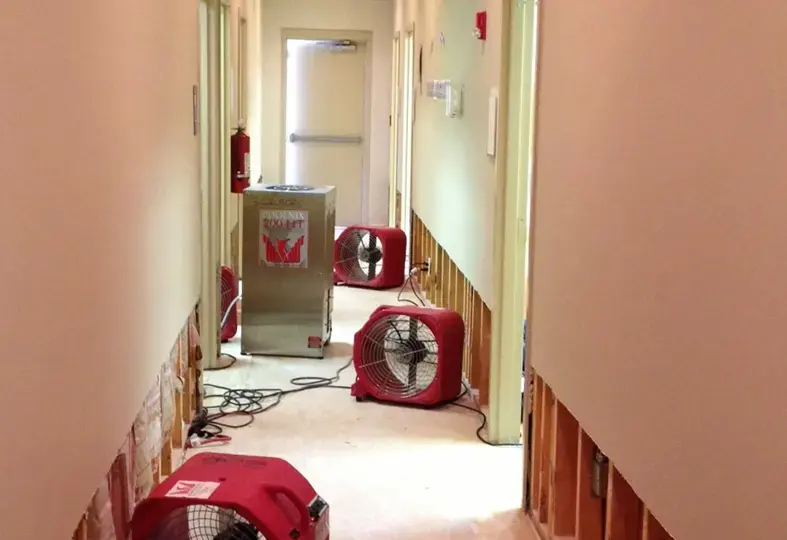
Air movers and low grain refrigerant dehumidifiers go in room by room, with desiccant units added for dense flooring and block.
- 4
Read until dry
Each day's meter numbers are written down, and the equipment stays until wet materials land within 2 to 4 points of a dry reference.
Three kinds of water in a Duluth home
Category 1: clean water
A split supply pipe or a leaking tank. Caught early, most materials dry where they sit.
Water heater leak cleanupCategory 2: gray water
Dishwasher or washer drain water and sump overflow. Pad is pulled and surfaces are treated.
Appliance leak water damageCategory 3: black water
Sewage and outside flood water. Porous materials it reached come out instead.
Sewage backup cleanup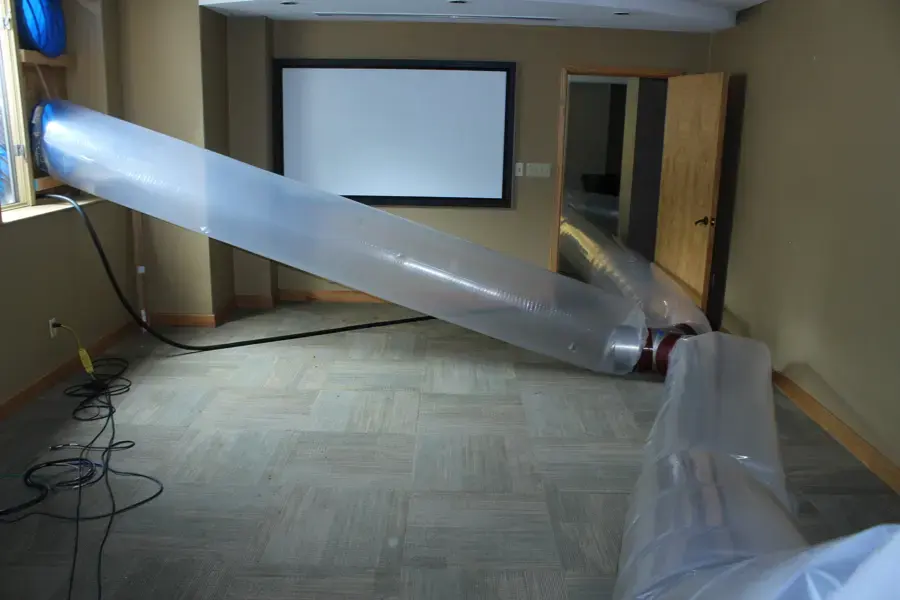
How the Duluth restoration team works a water loss
Duluth housing leans toward the 1980s and 1990s, and 31.7 percent of units sit in buildings of five or more. Water crosses floors and shared walls, so the team follows readings room to room.
Round-the-clock response
A Duluth loss is treated as urgent at any hour, weekends and holidays included.
IICRC S500 drying
Equipment is matched to the class of loss and left in place until the readings reach the goal.
Paperwork for the adjuster
Moisture maps, daily logs and dated photos, all captured before anything is removed.
Gwinnett County know-how
Hard rain, rare freezes, shared apartment walls and the Chattahoochee River edge shape many Duluth losses.
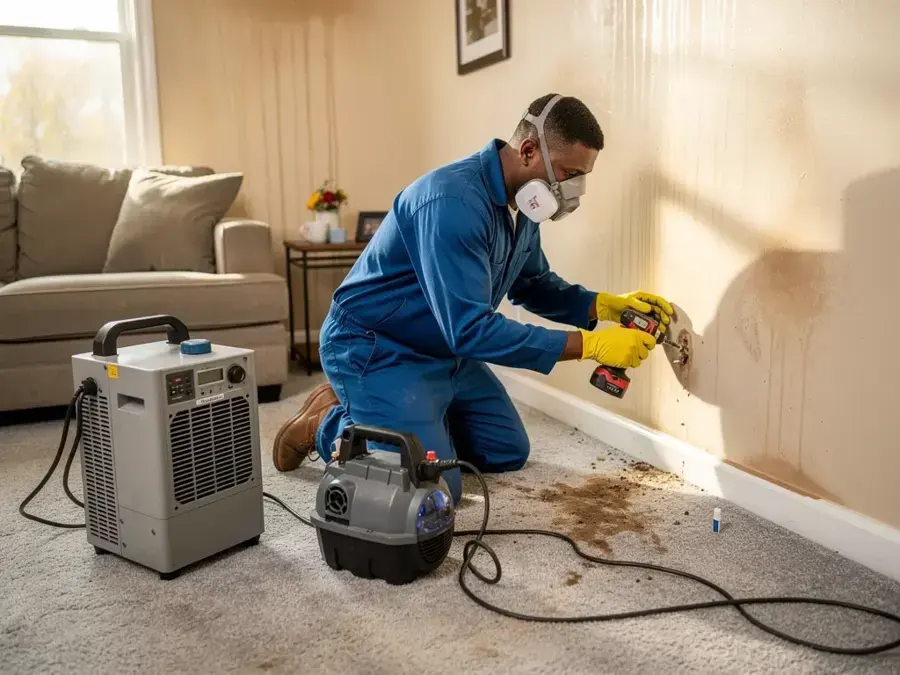
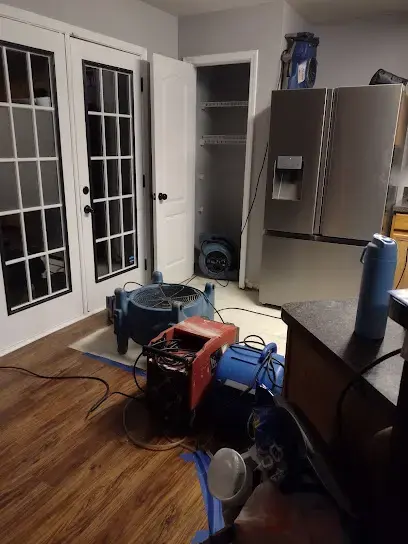
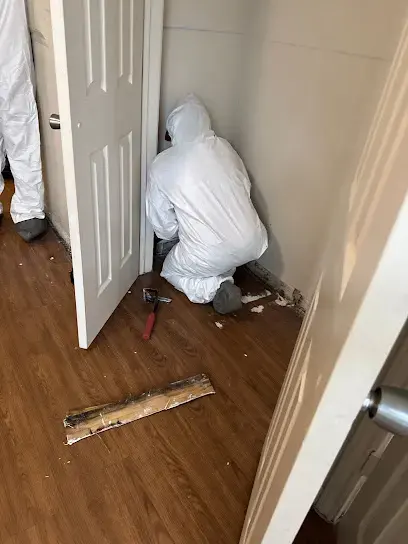
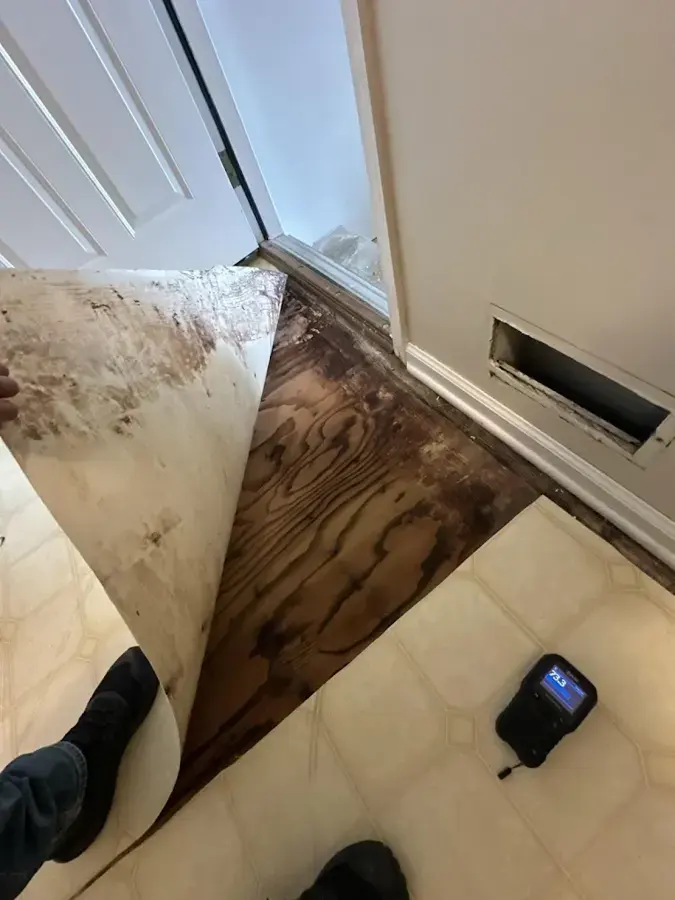
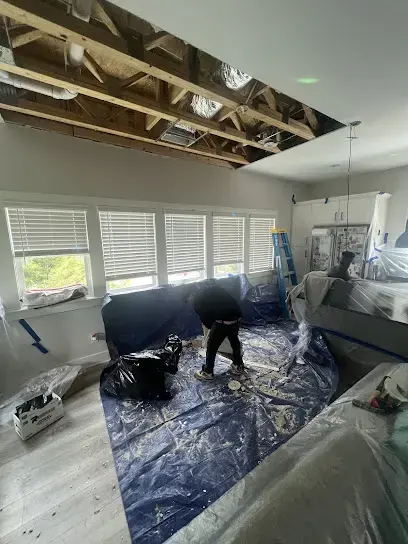
A look at a typical Duluth dry-out in progress
What a Duluth claim file should hold
Adjusters decide a water claim from the paperwork on the file. A solid Duluth claim file usually carries these five items.
- A moisture map from day one marking each wet wall, floor and ceiling
- Drying logs with material readings recorded daily until the goal is met
- Dated photos taken before anything is cut out or hauled off
- The water category and class of loss, which decide removal or drying
- An itemized scope arranged the way adjusters review a claim
Check your own policy
Policies often treat a sudden pipe burst, rising flood water and a sewer backup as three different things, and the last two may need added coverage.
Renters and condo owners should ask what the building policy covers. Coverage depends on the policy, so check with your own insurer.
Water damage restoration across Duluth and Gwinnett County
Duluth corridors and neighborhoods
ZIP codes
Nearby areas
Water damage in Duluth, GA: the local risk profile
Duluth sits in Gwinnett County with the Chattahoochee River along its north edge, and the typical house was built around 1994, so many plumbing parts have aged.

September 2009: catastrophic flooding hit the Atlanta metro area, with 10 to 20 inches of rain in under 24 hours, and Gwinnett County received a record flood on the morning of September 21.
- Aging plumbing: With a median build year near 1994, many Duluth water heaters, hoses and fixtures are deep into their service life.
- Shared buildings: About 31.7 percent of units sit in buildings of five or more, so one failed hose can wet the units around it.
- Heavy rain: Rain from Hurricane Helene in September 2024 flooded roads in parts of Gwinnett County.
- Rare freezes: Gwinnett County warns that a hard freeze is uncommon, but pipes can break and spill hundreds of gallons a day.
- Sewer laterals: The county makes the owner responsible for the sewer lateral up to the right-of-way connection.
Questions about Duluth water damage
What should I do in the first hour after a leak in Duluth?
Shut the main or fixture valve, turn off breakers to wet rooms only if the panel is dry and photograph every wet room. Then start extraction, since wet drywall and pad can grow mold within 24 to 48 hours.
Who handles water and sewer service in Duluth?
The City of Duluth lists the Gwinnett County Water Resources Department for water and sewer service, and Lake Lanier is the county's sole water source. A main break at the street is a county matter.
Does the city handle storm drainage?
The City of Duluth has its own Stormwater Department for local drainage and stormwater pollution questions. Water and sewer still come from the county, while the water already inside your home is what the crew extracts and dries.
Who owns the sewer lateral on my property?
Gwinnett County says the property owner maintains the sewer lateral up to the connection in the right-of-way. A cleanout at the right-of-way is county-maintained, while one nearer the house belongs to the owner.
Are most Duluth homes old?
Not especially. About 57.8 percent were built from 1980 to 1999 and only 11.8 percent before 1980. Those decades put aging water heaters, hoses and fixtures near the top of the leak list.
Do freezing temperatures break pipes in Duluth?
Rarely, but it happens. Gwinnett County says tiny cracks in a frozen pipe can release hundreds of gallons a day, and the county declared a local emergency ahead of the January 2026 ice storm.
How long does a Duluth dry-out take?
Most contained losses dry in three to five days. Dense flooring, a wet slab or a second level adds time, so the crew goes by daily readings rather than a calendar.
Will insurance pay for water damage in Duluth?
Sudden discharge from a pipe or appliance is the loss most policies are written around. Flood water and sewer backup often sit outside the base policy, so ask your own insurer what the policy includes.
Can an apartment or townhome leak reach a neighbor?
Yes. With 31.7 percent of Duluth units in buildings of five or more, water from a failed hose or pipe can drop through floors or run along shared walls, so the units above and below get mapped.
Do Duluth businesses get the same help?
Yes. Offices, restaurants, plazas and hotels get phased drying that keeps unaffected areas open. The Duluth commercial water damage page explains how the phasing works.
Water damage in Duluth? Start the drying right away.
Pad, drywall and subfloor soak up more water with every hour of delay. The extraction crew pulls the water out, and the drying team keeps going until the readings say dry.
(888) 532-4616Call for Duluth water removal now