Water Extraction in Lilburn, GA
Standing water keeps soaking into drywall, carpet pad and subfloor for as long as it sits. The Lilburn extraction crew pulls it out with truck-mounted extraction, then dries the structure to a verified reading.
(888) 532-4616Get the water out tonight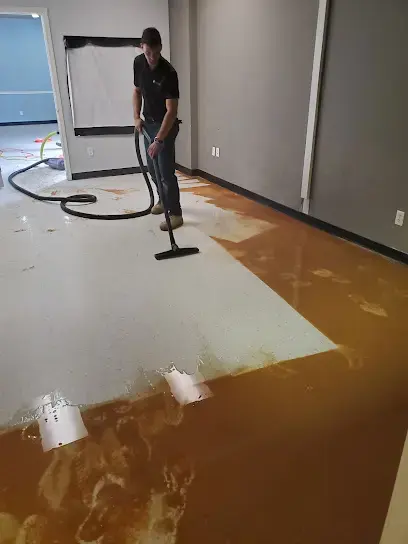
Extraction is the first and cheapest part of any dry-out. Every gallon the extraction crew pulls out as liquid is a gallon the dehumidifiers never have to pull out of the air, which is why a fast, thorough pump-out shortens the whole job in a Lilburn home.
First steps for water extraction and removal in Lilburn
- 1
Stop the source
Shut the main valve or the appliance supply valve so no new water reaches the floor.
- 2
Kill wet circuits
Switch off breakers for flooded rooms if the panel itself is dry and safe to reach.
- 3
Photograph first
Take wide photos and close-ups of the water and damaged items before anything moves.
- 4
Lift what you can
Move rugs, electronics and furniture legs off wet carpet, then call for extraction.
What does water extraction and removal cost in Lilburn, GA?
In Lilburn, GA, water extraction with the drying that follows typically runs $400 to $12,000, depending on the water category, how many rooms are wet, the material class and how fast extraction started.
One room, clean water
- Truck-mount pump-out
- Air movers for 3 to 4 days
- Daily readings
Several rooms or a level
- Carpet and pad extraction
- LGR dehumidifiers
- Moisture map for the claim
Whole floor or Category 2/3
- Pad and porous removal
- Antimicrobial application
- Extended drying
Ranges are typical, not a quote: category of water, square footage, material class and how fast drying started move the number most. Run the Lilburn water damage cost calculator for a closer range.
How water extraction and removal is handled in Lilburn
The tech who does the walkthrough maps moisture before any equipment goes down, so the drying plan matches what is actually wet. Equipment stays until the readings say dry, not until it looks dry.
- 1
Walkthrough and moisture map
Meters and thermal imaging trace water under baseboards, cabinets and into the level below.
- 2
Truck-mounted extraction
The extraction crew pulls standing water and presses water out of carpet and pad.
- 3
Drying setup
Air movers and LGR dehumidifiers go in at the evaporation load of each room.
- 4
Daily readings to dry
Readings are logged daily until materials match the dry reference.
Why fast extraction matters in a Lilburn home
Most homes around Old Town Lilburn, Killian Hill Road and Five Forks Trickum Road were built between the 1970s and the 1990s, with carpet over plywood subfloor, split-level stairs and finished lower levels. Water moves sideways under baseboards, wicks up drywall and drops through floor seams into the level below. Georgia's humid air slows natural evaporation, so wet materials stay wet for days without equipment.
- Carpet pad holds water like a sponge and needs weighted extraction, not a shop vacuum.
- Drywall wicks water upward; the high-water mark keeps climbing while the floor stays flooded.
- Mold can start growing within 24 to 48 hours on wet organic material, per the EPA.
How the extraction crew pulls water out
The tech who does the walkthrough maps moisture first with pinless meters and thermal imaging, so the crew knows where the water went, not just where it is standing. Truck-mounted extraction units do the heavy lifting because they move far more water than portable units and send it out of the house instead of into a tank in the next room. Weighted extraction wands then press water out of carpet and pad before any decision is made about what can be dried in place.
- Standing water removed first, then carpet and pad, then hard surfaces.
- Category 2 and 3 water means pad comes out and surfaces get an EPA-registered antimicrobial.
- Air movers and LGR dehumidifiers go in right after extraction, sized to each room.
After the pump-out: drying and the claim file
Extraction ends the flood, not the job. The drying team records readings every day and pulls equipment only when wet materials are within 2 to 4 points of a dry reference material in the same house. Those daily logs, the moisture map and timestamped photos form the file an adjuster reviews. If storm water came in from outside, read how flood coverage differs from a homeowner policy. For the drying phase itself, see structural drying in Lilburn, and for water that came up from below grade, see basement flooding cleanup.
Water extraction and removal across Lilburn and southern Gwinnett
The Lilburn restoration crew covers ZIP 30047 and 30048, from Old Town Lilburn and the Camp Creek Greenway out along Killian Hill Road, Rockbridge Road and Five Forks Trickum Road.
Nearby coverage reaches Mountain Park, Stone Mountain, Snellville, Tucker, Lawrenceville, Norcross, Grayson.
Related water damage services in Lilburn
Water Extraction and Removal questions in Lilburn, GA
How fast should water be extracted?
As soon as possible. Every hour water sits, more of it soaks into drywall, pad and subfloor, which turns a pump-out into a tear-out. Mold can start within 24 to 48 hours on wet materials.
Can a shop vacuum do the job?
A shop vacuum removes surface water but not the water held in carpet pad and subfloor. Truck-mounted extraction and weighted wands remove far more, which shortens drying time.
Will the carpet be saved?
Clean-water carpet extracted quickly often dries in place. Pad usually comes out when the water is Category 2 or 3, and carpet touched by sewage is removed.
How long does extraction take?
The pump-out itself usually takes a few hours for a typical room or two. Drying the structure afterward typically runs 3 to 5 days for a contained loss.
Why is equipment left running after extraction?
Extraction removes liquid water. Air movers and dehumidifiers remove the moisture still inside materials, and they stay until readings show the structure is dry.
Does a homeowner policy cover extraction?
Sudden and accidental water, such as a burst supply pipe, is often covered; rising surface water usually needs flood coverage. Coverage depends on your policy, so check with your own insurer.
Water on the floor in Lilburn? Start extraction now.
The sooner the extraction crew pulls the water out, the less drywall, pad and subfloor has to come out later.
(888) 532-4616Lilburn water extraction, 24/7