When sewage comes up through a floor drain, tub or toilet in Duluth, Georgia, the first question is who is responsible for the pipe. Gwinnett County has a clear answer for the part that runs from the house to the street.
Key takeaways
- Gwinnett County says the owner maintains the sewer lateral, up to and including the connection to the county sewer in the right of way.
- A cleanout at the right of way is county maintained, and a cleanout closer to the house belongs to the owner.
- The county recommends a backwater device when the lowest plumbing fixture sits below the grade of an upstream manhole.
- Sewage is contaminated water. People, pets and food stay out of the area until it is cleaned and dried.
- Anything porous that sewage touches is usually removed, not saved.
What the sewer lateral is
The sewer lateral is the pipe that carries wastewater from a house to the main sewer in the street. It is the last stretch of the system that the homeowner touches.
The City of Duluth lists the Gwinnett County Water Resources Department for water and sewer service. Duluth also has its own Stormwater Department for local drainage questions.
Who owns which part
Gwinnett County says the property owner is responsible for the maintenance and operation of the lateral, up to and including the connection to the county sewer in the right of way.
That means a blockage or break in that pipe is generally the owner's to fix, even when the problem is out near the street.
The cleanout, and why location matters
County standards require a sewer cleanout on the lateral at the right of way, and the county maintains it.
A cleanout closer to the home belongs to the owner. Knowing which cleanout is which saves time when a plumber or the county is called.
Signs a sewer pipe is backing up
Sewage rarely appears everywhere at once. The lowest fixture in the house is usually the first to show it.
When more than one fixture is affected, treat it as a main drain problem and stop using water in the house. Running a washer or taking a shower sends more sewage up the lowest drain.
- Gurgling from a toilet or tub when another fixture drains.
- Dark, foul smelling water coming up in a floor drain, shower or tub.
- Several fixtures backing up together, which points to the main drain or lateral.
- A toilet that will not flush even after a plunger.
- Damp flooring near a drain, with a sewage odor.
When the backup is the county's side
Not every backup comes from the home's own pipe. If the county main in the street is blocked or overloaded, sewage can push back up into the lowest fixtures.
That is the reason Gwinnett County recommends a sanitary backwater device when the lowest plumbing fixture is below the grade of an upstream manhole.
- Check a neighbor: if several homes on the street are backing up, the main may be involved.
- Call the county's water resources department to report it.
- Report the date and time and what was seen, because those details matter for any claim.
- A plumber can tell whether the blockage is in the house, the lateral or the main.
Why sewage cleanup is its own category
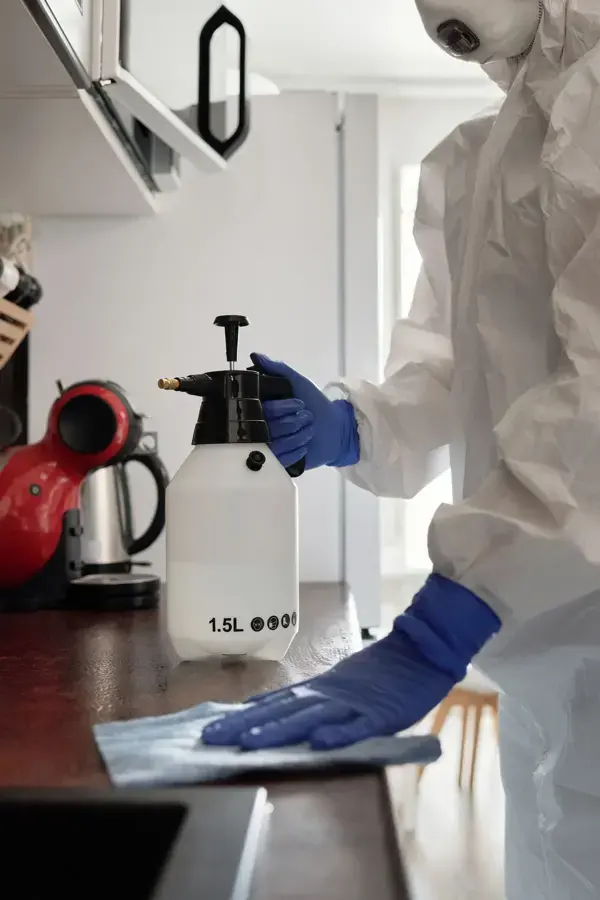
Sewage is Category 3 water, the most contaminated class. It carries bacteria and viruses, and it should not be handled with household mops and towels.
In Duluth, a large share of homes were built from 1980 to 1999, with a median build year near 1994, and many sit in attached or multi unit buildings. A backup in one unit can reach a neighbor's through shared walls and floors.
What stays out of the area
- Children and pets stay out until the area is cleaned.
- Food, dishes and anything stored in the affected rooms are discarded if they touched the water.
- Skin should not touch the water, and boots and gloves are worn for any handling.
What is removed
- Carpet and pad, which cannot be cleaned of sewage.
- Baseboards and the lower section of drywall that wicked the water.
- Wet insulation and soft furniture.
- Cabinet toe kicks and anything porous at floor level.
How cleanup runs
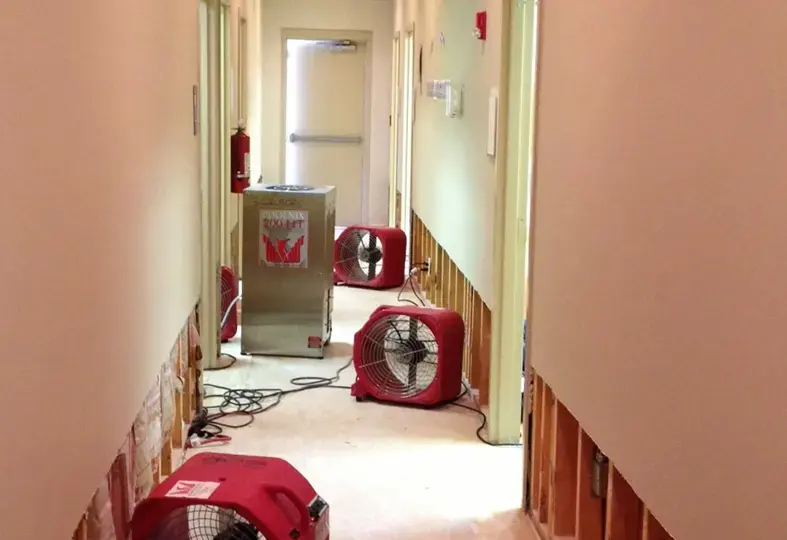
The crew starts by containing the area and protecting the rest of the house. Then standing sewage is pumped or extracted and the affected materials come out.
Surfaces are cleaned and treated with a disinfectant made for the job. Drying equipment follows, and the crew keeps going until moisture readings match a dry reference.
- Contain: close off the room and protect clean areas.
- Extract: remove standing sewage with pumps and extractors.
- Remove: take out porous materials that cannot be cleaned.
- Clean and treat: disinfect hard surfaces and framing.
- Dry: run air movers and dehumidifiers to a reading.
Preventing the next backup
A few habits lower the odds. They cost little compared with another cleanup.
Anything other than waste and toilet paper stays out of the toilet, and grease stays out of the kitchen drain. A plumber can camera the lateral and report on its condition.
Gwinnett County also says the owner is responsible for the water service on the customer side of the meter, including backflow preventers and irrigation systems. That is a separate pipe from the sewer lateral, but it matters when a plumber is hired.
Lake Lanier is Gwinnett County's sole water source, and the sewer system sits behind every bath and kitchen in Duluth. Keeping what goes down the drain simple protects it.
- Locate both cleanouts and keep them accessible.
- Ask a plumber about a backwater device if the lowest fixture sits low.
- Do not pour grease down kitchen drains.
- Keep tree roots away from the lateral where possible.
Help in Duluth, Georgia
The sewage backup cleanup page for Duluth explains how the work is done and what is covered. The Duluth water damage hub lists the other services.
A general overview is on the page for sewage backup cleanup. For water that has also spread across flooring, see water extraction in Duluth.
Questions
Who is responsible for the sewer lateral in Duluth, Georgia?
Gwinnett County says the property owner maintains the lateral, up to and including the connection to the county sewer in the right of way.
Who maintains the cleanout?
The county maintains the cleanout required at the right of way. A cleanout closer to the home belongs to the owner.
What is a backwater device?
It is a valve that keeps sewage from flowing backward into a house. Gwinnett County recommends one if the lowest plumbing fixture is below the grade of an upstream manhole.
Is sewage water dangerous to touch?
Yes. It is the most contaminated class of water and can carry bacteria and viruses. It should be removed by a crew with protective gear.
Can carpet affected by sewage be saved?
Usually not. Carpet and pad are porous and cannot be fully cleaned of sewage, so they are removed and replaced.
Should water be used while a backup is happening?
No. Running taps, showers and washers sends more sewage to the lowest drain. Stop using water until the cause is found.