Structural Drying in Doraville, GA
A surface that feels dry can hide wet studs, particularly in older Doraville ranches and bungalows. The drying team sizes equipment to each room, reads meters every day and keeps machines running until the numbers agree.
(888) 532-4616Dry the structure properly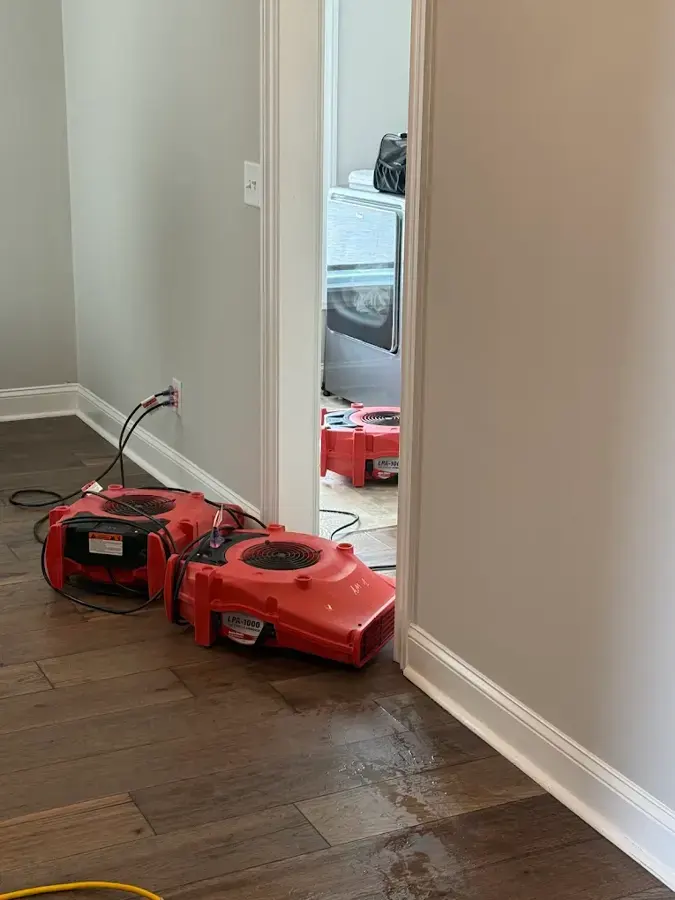
A house can look rescued while its studs, subfloor and plaster are still holding water. Drying is the stage that settles whether the repair lasts, and Georgia's humid air gives equipment a harder job than it would have in a dry climate.
First steps for structural drying and dehumidification in Doraville
- 1
Run the air conditioner
Cooler, drier indoor air speeds drying, except when the water was contaminated.
- 2
Open closets and drawers
Give air a path into closets, cabinets and drawers that sit on wet areas.
- 3
Wait on finishes
Save painting, trim work and new flooring for after the meters confirm dry.
- 4
Leave equipment running
Leave air movers and dehumidifiers running until the drying team collects them.
What does structural drying and dehumidification cost in Doraville, GA?
Structural drying in Doraville, GA typically costs $800 to $15,000. The loss class, the square footage, how much hardwood, plaster or masonry is wet and the speed of the first visit set the total.
One area, Class 1 or 2
- Fans placed
- Dehumidifier running
- Readings each visit
Multiple rooms or one floor
- Wall cavity air
- Mats on hardwood
- Humidity logs
Class 4 materials or a whole house
- Desiccant units
- Containment
- Extended monitoring
Ranges are typical, not a quote: category of water, square footage, material class and how fast drying started move the number most. Run the water damage cost calculator for a closer range.
How structural drying and dehumidification is handled in Doraville
The tech who does the walkthrough maps moisture before any equipment goes down, so the drying plan matches what is actually wet. Equipment stays until the readings say dry, not until it looks dry.
- 1
Map
Meters and a thermal camera locate wet materials and fix the dry reference.
- 2
Size the gear
Air movers and dehumidifiers match each room's class of loss.
- 3
Record daily
Each visit adds material and psychrometric readings to the file.
- 4
Release on proof
Machines are collected once materials sit within 2 to 4 points of the reference.
Older homes need a plan that fits
The median Doraville home was built in 1975, and about 17.2% of units date from the 1950s, 19.9% from the 1960s and 20.4% from the 1970s. Brick and frame ranch, bungalow and split-level houses of that age can have denser wall materials and older framing, so equipment counts and monitoring points are set room by room.
- The loss class, from 1 through 4, decides how much equipment each room gets.
- Air movers follow the evaporation load of the room rather than a set count.
- Daily numbers are added to the claim file.
How drying is measured
Under IICRC S500, the team first records a dry reference from an untouched area of the house, then dries wet materials until they land 2 to 4 points from it. Temperature and humidity numbers taken each day confirm the air is really drawing water out.
Equipment, and the cost of stopping early
Low-grain dehumidifiers pull water out of humid air efficiently, a real help through a Georgia summer. Desiccant units handle hardwood, plaster and other dense materials, while wall cavity systems send dry air through closed walls. Taking machines out too soon leaves water inside the framing and subfloor, and it comes back as lifting floors, flaking paint and odor, with mold close behind.
- The meters, not the look of the room, decide when the machines go.
- Plastic containment can reduce the volume of air being dried so the machines focus on the wet rooms.
Drying normally comes after water extraction, and crawl space water damage explains drying beneath a house.
Structural drying and dehumidification across Doraville and nearby towns
The drying team covers ZIP 30340 and 30360, working in Tilly Mill bungalows and ranches, Northwoods, Oakcliff and Guilford Village homes and the Assembly redevelopment.
The same service nearby: structural drying and dehumidification in Lilburn, Peachtree Corners, Tucker.
Related water damage services in Doraville
Structural Drying and Dehumidification questions in Doraville, GA
What does an S500 dry-out actually involve?
The job follows the industry standard: moisture is mapped, equipment is matched to the loss class, readings are logged daily and drying continues until materials match a dry reference.
Why does the equipment run for days?
Studs, subfloor and slab keep water after the surface feels dry, so machines run until the meters show the hidden water is gone.
What makes an LGR dehumidifier different?
Low grain refrigerant units draw far more water from humid air than a household model, which helps in Georgia summers.
When do desiccant units come in?
Hardwood, plaster, masonry and concrete call for them, as do cool conditions that slow refrigerant units.
How many days is typical?
A small, contained loss in Class 1 or 2 usually finishes in 3 to 5 days; hardwood, plaster and multi-story jobs run longer.
Can the machines be switched off at night?
No. Steady airflow and dehumidification are what move water out, so shutting them off stalls drying and can lengthen the job.
Ready to get the structure properly dry? Reach out now.
A surface that feels dry can hide wet framing. The crew keeps equipment in place until the readings prove otherwise.
(888) 532-4616Doraville structural drying, 24/7