Water Extraction in Doraville, GA
Water that sits on a floor keeps working its way into pad, drywall and subfloor. The Doraville extraction crew lifts it with truck-mounted equipment, then maps what stayed wet and dries it to a measured reading.
(888) 532-4616Clear the water from the floor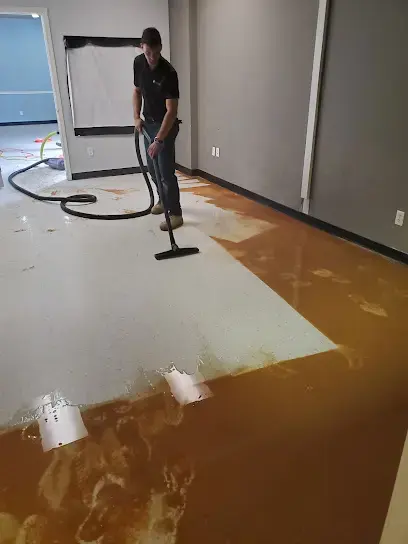
Pulling out the liquid is the quickest way to shorten everything that follows. Water removed by extraction never has to be drawn out of the air by dehumidifiers, so a thorough first pass cuts the length of the whole job in a Doraville home or shop.
First steps for water extraction and removal in Doraville
- 1
Turn off the supply
Close the main valve, or the valve at the failed appliance, so nothing more reaches the floor.
- 2
Kill wet circuits
Switch off breakers for flooded areas only when the panel itself is dry and easy to reach.
- 3
Photograph first
Take wide and close shots of the water and damaged belongings before moving anything.
- 4
Raise valuables
Get rugs, electronics and furniture legs off the wet carpet, then arrange the pump-out.
What does water extraction and removal cost in Doraville, GA?
Water extraction plus the drying that follows typically runs $400 to $12,000 in Doraville, GA. Water category, wet room count, material class and how soon pumping starts set the total.
One room, clean water
- Truck-mount pump-out
- Fans for 3 to 4 days
- Readings each visit
Several rooms or a level
- Carpet and pad pressed out
- Dehumidifiers placed
- Moisture map for the file
Whole floor or Category 2 or 3
- Pad and porous removal
- Antimicrobial treatment
- A longer drying run
Ranges are typical, not a quote: category of water, square footage, material class and how fast drying started move the number most. Run the water damage cost calculator for a closer range.
How water extraction and removal is handled in Doraville
The tech who does the walkthrough maps moisture before any equipment goes down, so the drying plan matches what is actually wet. Equipment stays until the readings say dry, not until it looks dry.
- 1
Walk and map
A thermal camera and meters follow water under baseboards and cabinets and into the level below.
- 2
Lift the water
Truck-mounted units clear the floor while wands press carpet and pad.
- 3
Place the drying gear
Air movers and dehumidifiers are matched to each room's evaporation load.
- 4
Read until dry
Daily numbers are logged until materials sit near the dry reference.
Why speed matters in Doraville
The median Doraville home dates to 1975. In a ranch or split-level, spilled water runs freely from room to room, and in an apartment building it drops through the floor into the unit below. Humid Georgia air slows evaporation, which leaves wet materials soggy for days without equipment. The March 7, 2018 break of a 48-inch main on Buford Highway showed how quickly one infrastructure failure can release a huge volume of water, which is why pumping capacity counts.
- Carpet and pad hold far more water than they show, and household vacuums leave most of it behind.
- Drywall wicks moisture upward, so the wet edge climbs while the floor stays flooded.
- Warm, humid rooms let mold begin on wet materials within 24 to 48 hours.
How the crew gets the water out
Before a pump starts, the walkthrough tech scans with a thermal camera and pinless meters to see where the water went. High-volume truck-mounted units then carry the bulk of it outdoors instead of into a tank indoors, and weighted wands squeeze carpet and pad before anyone decides what stays.
- Pooled water comes first, then soaked carpet, then hard floors.
- Water in Category 2 or 3 costs the pad and calls for an EPA-registered antimicrobial.
- Fans and dehumidifiers go in right behind the pumps, sized for each room.
After the pump-out: drying and paperwork
Taking out the liquid stops the flooding but not the damage. Readings are logged each day, and machines leave only when wet materials come close to a dry reference from elsewhere in the house. The moisture map, those logs and dated photos build the file an adjuster reads. Structural drying in Doraville covers the drying side, and basement flooding cleanup covers water that rises in a lower level.
Water extraction and removal across Doraville and nearby towns
The extraction crew serves ZIP 30340 and 30360, from Northwoods and Oakcliff to Tilly Mill and Guilford Village, plus the shops and offices along Buford Highway and Peachtree Boulevard.
The same service nearby: water extraction and removal in Lilburn, Peachtree Corners, Tucker.
Related water damage services in Doraville
Water Extraction and Removal questions in Doraville, GA
How fast does standing water need to come out?
Right away if possible. Every hour lets more soak into drywall, pad and subfloor, and a simple pump-out can become a tear-out.
Can a household wet-dry vacuum do the job?
It clears surface water but leaves what pad and subfloor hold. Truck-mounted equipment and weighted wands remove far more, which makes the drying that follows shorter.
Is the carpet ruined?
Carpet wet with clean water and extracted early often dries in place. Pad usually goes when the water is Category 2 or 3, and sewage-soaked carpet is discarded.
How long does the pump-out last?
A room or two normally takes a few hours. Drying then runs about 3 to 5 days for a contained loss.
Why do machines keep running once the floor is clear?
Pumping lifts liquid only. Air movers and dehumidifiers draw out the moisture held inside materials, and they stay until the readings show the structure is dry.
Will insurance pay for extraction?
A sudden burst pipe is often covered, but rising surface water usually calls for flood coverage. The policy wording decides, so ask your own insurer.
Water across the floor? Get the pump-out going.
Every hour the water waits, more drywall, pad and subfloor is lost. Quick extraction keeps the tear-out smaller.
(888) 532-4616Doraville water extraction, 24/7