Water Extraction in Stone Mountain, GA
Wet carpet and pad hold water in 1970s and 1980s houses long after a flood looks gone. The extraction crew pulls the standing water first, so the drying team has far less moisture left to fight.
(888) 532-4616Start pulling the water out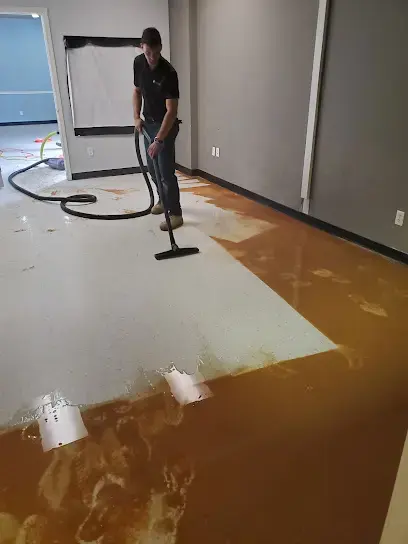
Extraction is the opening move of any dry-out. Water lifted out as liquid never has to be pulled from the air later, so a thorough pump-out shortens the rest of the job for a Stone Mountain house and trims the electricity the equipment runs on.
First steps for water extraction and removal in Stone Mountain
- 1
Find the shutoff
Closing the main or the fixture valve stops the flow so the floor stops filling.
- 2
Mind the outlets
Cut breakers to wet rooms when the panel is on dry ground, and stay off wet floors near cords.
- 3
Take photos early
Shoot each wet room and the high-water marks on walls before anything is moved.
- 4
Raise what you can
Lift small furniture, rugs and boxes onto dry surfaces to keep them out of standing water.
What does water extraction and removal cost in Stone Mountain, GA?
Extraction plus the drying that follows usually costs $400 to $12,000 in Stone Mountain, GA. The water category, how many rooms are wet, the material type and how soon pumping begins move the number.
A single wet room
- Standing water removed
- Fans for a few days
- Readings every day
Several rooms or one level
- Soaked carpet and pad lifted
- LGR dehumidifiers
- Moisture map included
Whole floor or contaminated
- Pad and porous items out
- Surface disinfecting
- Extended drying
Ranges are typical, not a quote: category of water, square footage, material class and how fast drying started move the number most. Run the water damage cost calculator for a closer range.
How water extraction and removal is handled in Stone Mountain
The tech who does the walkthrough maps moisture before any equipment goes down, so the drying plan matches what is actually wet. Equipment stays until the readings say dry, not until it looks dry.
- 1
Walk and map
Meters and thermal imaging mark where the water traveled before any equipment is placed.
- 2
Extract
Truck-mounted units clear standing water, then weighted wands press out carpet and pad.
- 3
Set the dry-out
Air movers and dehumidifiers go in, sized to each room and its materials.
- 4
Read daily
Moisture readings are logged each day until wet areas match a dry reference.
Why speed matters in Stone Mountain houses
Stone Mountain's housing leans toward the 1970s and 1980s, with 678 and 650 homes from those decades, plus pockets of much older houses near the historic village. Carpet over wood subfloor and finished rooms let water slip under baseboards, climb drywall and drop through floor seams. Humid Georgia air slows evaporation, so wet materials stay wet for days without equipment.
- Pad and carpet trap far more water than they show, so a weighted wand pressed on top pulls it up.
- Drywall draws moisture upward while the floor stays flooded, so the stain keeps climbing the wall.
- Wet organic materials can start growing mold within 24 to 48 hours.
What the crew does with the water
Before any pumping, the crew scans with pinless meters and thermal imaging to learn how far the water traveled. Truck-mounted units then pull large volumes out of the house rather than into a tank next door. Weighted wands press the remaining water from carpet and pad, and only then does anyone decide what can be dried in place.
- Open water goes first, soaked carpet next, hard flooring last.
- Gray or black water sends the pad out, and surfaces are treated with an EPA-registered product.
- Fans and LGR dehumidifiers follow the pump-out, sized room by room.
Once the water is out
Getting the water out stops the flooding, yet the building is still wet. Each day the drying team records readings, and the equipment stays until wet materials track close to an untouched area of the house. The readings, the moisture map and dated photos form the file an adjuster reads. Structural drying in Stone Mountain covers the drying phase, and basement flooding cleanup covers water that came in from below.
Water extraction and removal across Stone Mountain and nearby towns
The Stone Mountain extraction crew covers ZIP 30083, 30086, 30087 and 30088, including Stone Mountain Village, Redan Park, Essex Farms, Barrington and the Memorial Drive corridor.
The same service nearby: water extraction and removal in Lilburn, Tucker, Clarkston.
Water damage restoration in Stone Mountain · every town covered
Related water damage services in Stone Mountain
Water Extraction and Removal questions in Stone Mountain, GA
How fast should extraction start in Stone Mountain?
As early as possible. Pad and drywall begin absorbing within minutes, and Georgia humidity keeps them wet, so pulling the standing water first cuts drying time and the amount of material that must be removed.
Why not just use a shop vacuum?
A shop vacuum clears a puddle but not the water held in pad and subfloor. Truck-mounted units and weighted wands pull far more, which leaves the dehumidifiers much less moisture to handle.
Is the water dangerous?
It depends on the source. Supply water is clean at first, but anything that crossed a floor, soil or a drain can be Category 2 or 3, which changes what is removed and how surfaces are treated.
Does extraction mean the house is dry?
No. Extraction ends the standing water, and the drying team then works to a reading. The structural drying page for Stone Mountain explains how the finish is measured.
What happens to carpet and pad?
Clean-water carpet is often extracted and dried in place, while the pad is usually discarded once it is soaked or contaminated. The walkthrough readings decide what stays.
Does it matter in the older homes near the village?
Yes. Stone Mountain has about 152 housing units dating from 1939 or earlier, and older homes can have plaster walls and wood floors that dry slowly, so the water comes out early and meters check the walls.
Floor covered in water? Get Stone Mountain extraction started.
Pad, drywall and subfloor take on more with every hour. The extraction crew gets the water out so less material ends up in a dumpster.
(888) 532-4616Stone Mountain water extraction, 24/7