Water Extraction in Clarkston, GA
Water that sits keeps soaking into carpet pad, drywall and subfloor, and in a multi-unit building it keeps traveling. The Clarkston extraction crew pulls it out with a truck-mounted unit, then dries the building until the numbers agree.
(888) 532-4616Start the pump-out tonight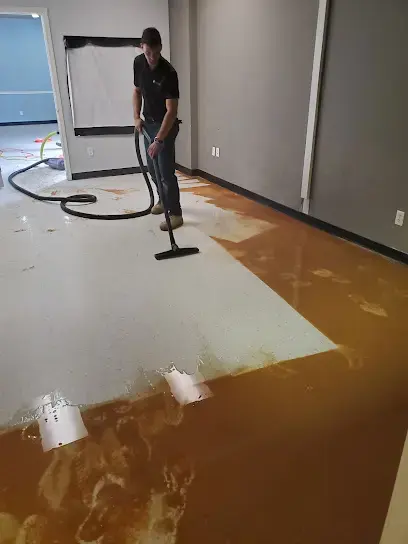
Taking water out as a liquid is the cheapest stretch of any dry-out, because whatever leaves through a hose is moisture the dehumidifiers will not have to pull from the air. In Clarkston it counts double, since a flooded unit can pass water to the one beside or below it.
First steps for water extraction and removal in Clarkston
- 1
Stop the source
Turn off the fixture valve or main shutoff so the floor stops getting wetter.
- 2
Tell the manager
In an apartment, alert the property manager so the units around yours can be checked.
- 3
Photograph first
Shoot wide and close-up pictures of the water and the damage before anything is moved.
- 4
Lift what you can
Raise rugs, electronics and furniture legs off the soaked carpet, then call.
What does water extraction and removal cost in Clarkston, GA?
Water extraction with the drying that follows in Clarkston, GA typically runs $400 to $12,000, with the water category, the number of wet rooms, the type of material and the speed of response driving the figure.
One room, clean water
- Pump-out by truck mount
- 3 to 4 days of fans
- Daily moisture checks
A few rooms or one level
- Soaked carpet and pad pressed
- LGR dehumidifiers
- Moisture map for the file
A whole floor, or Category 2/3
- Porous materials bagged
- Surfaces sanitized
- Longer drying run
Ranges are typical, not a quote: category of water, square footage, material class and how fast drying started move the number most. Run the water damage cost calculator for a closer range.
How water extraction and removal is handled in Clarkston
The tech who does the walkthrough maps moisture before any equipment goes down, so the drying plan matches what is actually wet. Equipment stays until the readings say dry, not until it looks dry.
- 1
Walkthrough and map
Meters and a thermal camera follow water beneath trim and cabinets and down into the unit below.
- 2
Truck-mount extraction
Open water is lifted first, then carpet and pad are squeezed with weighted wands.
- 3
Set the machines
Air movers and LGR dehumidifiers go in to suit how much water each room can release.
- 4
Read until dry
Moisture numbers are taken each day until materials match the dry reference.
Why multi-unit buildings raise the stakes
A 2016 draft city plan counted 67 percent of Clarkston housing as multi-family, and many of those buildings stack apartments over shared floors and walls. Water leaves one unit through floor seams, along baseboards and down wall cavities, so the crew checks the neighbors before the pump goes quiet. Humid Georgia air also holds back evaporation, so soaked materials stay soaked for days when no machines run.
- Pad soaks up far more than the carpet shows, so it gets pressed with weighted wands rather than a household vacuum.
- Drywall wicks upward, so the wet line keeps rising while the floor remains flooded.
- Mold can take hold on soaked organic materials in a day or two.
How the water comes out
A thermal camera and meters let the walkthrough tech see where water traveled, not just where it stands. A truck-mounted unit does the heavy lifting and carries the water outdoors. Weighted wands then squeeze the carpet and pad, and only after that is anything marked to go.
- Order of work: open water first, then soaked carpet and pad, then hard floors and cabinet bases.
- With Category 2 or 3 water the pad is thrown out and surfaces are sanitized using an EPA-registered product.
- Dehumidifiers and air movers follow straight after, sized room by room.
After the pump-out
Extraction ends the standing water, not the project. The drying team records numbers daily and releases equipment only when materials sit within 2 to 4 points of a dry reference. The moisture map, the daily numbers and dated photos make up the adjuster's file. Structural drying covers that phase, and storm flood cleanup applies when the water came in from outside.
Water extraction and removal across Clarkston and nearby towns
The Clarkston extraction crew covers ZIP 30021, from Downtown Clarkston and the Market Street core to the apartment corridors on Brockett Road and North Indian Creek Drive.
The same service nearby: water extraction and removal in Lilburn, Tucker, Stone Mountain.
Related water damage services in Clarkston
Water Extraction and Removal questions in Clarkston, GA
How quickly does water need to come out?
As soon as possible. The longer it sits, the deeper it works into drywall, pad and subfloor, which can turn a pump-out into a tear-out, and damp organic materials may begin growing mold within 24 to 48 hours.
Does extraction reach the apartment below mine?
It can. Water slips through floor seams and ceilings, so the crew meters the ceiling and walls of the unit below and tells the property manager where more extraction may be needed.
Can a shop vacuum do the job?
A shop vacuum clears surface water but not what carpet pad and subfloor hold. Truck-mounted extraction and weighted wands lift far more, which shortens the drying that follows.
Will my carpet survive?
Carpet soaked by clean water and extracted promptly can often stay put and dry. Pad usually goes when the water is Category 2 or 3, and carpet that met sewage is discarded.
Why does equipment stay after extraction?
Extraction takes out liquid only. Fans and dehumidifiers draw out the moisture held inside materials, and they keep running until the numbers show the structure is dry.
Will insurance cover extraction?
A burst pipe or similar sudden leak is often covered, while creek or storm flooding generally needs its own policy. Coverage depends on your policy, so check with your own insurer.
Flooded floor in Clarkston? Get the water out.
Each hour the water stays, more material has to be torn out, and more of it can reach the neighbors.
(888) 532-4616Clarkston water extraction, any hour