Sump Pump Failure Cleanup in Tucker, GA
A sump pump that stops during a heavy Tucker storm lets groundwater fill the pit and spill across the floor. The extraction crew pumps the basement down, sorts what can be saved and dries the walls and slab.
(888) 532-4616Clear the sump overflow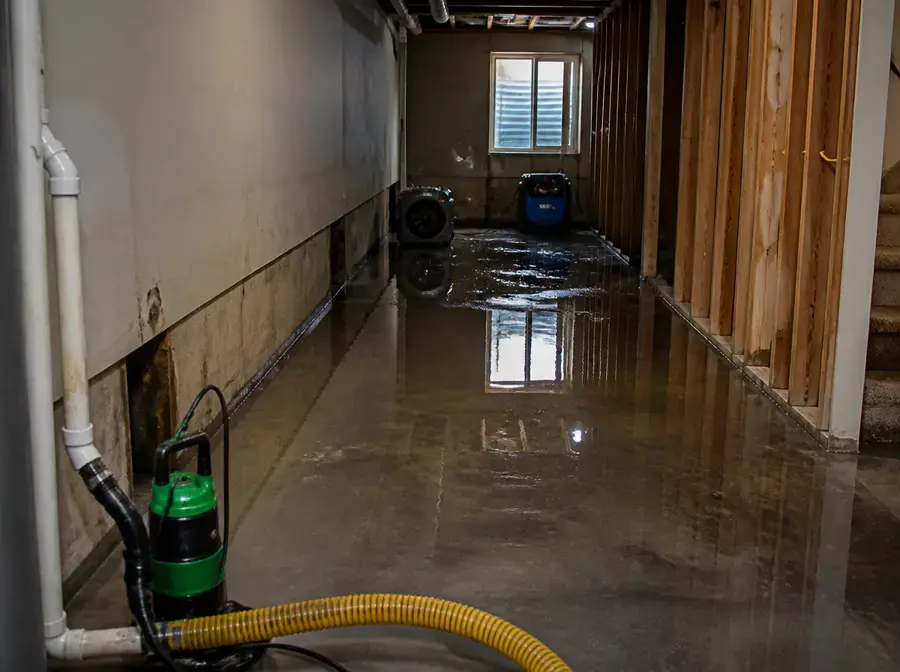
A sump pit exists to move groundwater away from a lower level, and its pump has to work in the worst weather. When heavy rain meets a power loss, an ice storm for example, the pit can overflow and spread water across the floor.
First steps for sump pump failure cleanup in Tucker
- 1
Keep out of water near outlets
Standing water near wiring is a shock risk, so stay on dry stairs.
- 2
Check the pump
If it is safe, look at the power supply and whether the float moves freely, and never reach into the water.
- 3
Move belongings up
Lift boxes, rugs and electronics to dry shelves or an upper level.
- 4
Photograph the pit
Record the pit, the water level and affected items for the claim.
What does sump pump failure cleanup cost in Tucker, GA?
In Tucker, GA, sump pump failure cleanup typically runs $1,000 to $15,000. How deep the overflow got, whether the basement is finished, the materials involved and how soon drying started set the total.
Bare concrete floor
- Pump-out and extraction
- Antimicrobial on the slab
- Dehumidifier
Carpeted lower level
- Carpet and pad removal
- Wall bottom drying
- LGR dryers and fans
Deep overflow after a long outage
- Porous material removal
- Flood cuts
- Longer block drying
Ranges are typical, not a quote: category of water, square footage, material class and how fast drying started move the number most. Run the water damage cost calculator for a closer range.
How sump pump failure cleanup is handled in Tucker
The tech who does the walkthrough maps moisture before any equipment goes down, so the drying plan matches what is actually wet. Equipment stays until the readings say dry, not until it looks dry.
- 1
Pump it down
Standing water is lowered with the power hazards handled first.
- 2
Sort the contents
Belongings and finishes are split into saveable and not saveable.
- 3
Clean and treat
Slab and framing are cleaned and treated for contaminated groundwater.
- 4
Dry the basement
Dehumidifiers and air movers run until walls, slab and wood read dry.
What makes a pump quit in a storm
Power loss is the leading cause, since most pumps run on household current. Others are a stuck float switch, a clogged inlet, a worn motor or a discharge pipe that froze or kinked. A pump can also be too small for the water arriving during a long, soaking rain.
- A stuck float never tells the pump to start.
- Silt and debris clog the intake screen.
- Old motors burn out after years of cycling.
Cleaning up after a pit overflow
The crew pumps the basement down first, then sorts belongings and finishes into what can be saved and what cannot. Water that came up from the ground picks up soil, so it is handled as Category 2 and sometimes 3. Slab, block walls and framing then get dehumidifiers and air movers until the meters settle.
- Carpet pad and low drywall that soaked up groundwater are removed.
- Hard surfaces and the slab are cleaned and treated with an antimicrobial.
- Wall bottoms are checked with meters, since block holds water long after the floor looks dry.
Protecting the basement next time
A battery backup pump, a tested float and a clear discharge pipe cover most failures. Run water into the pit before a forecast storm to confirm the pump starts and the water leaves the house, and aim the discharge well away from the wall. See basement flooding cleanup in Tucker and water extraction in Tucker for more on the cleanup.
Sump pump failure cleanup across Tucker and nearby towns
The Tucker extraction crew covers ZIP 30084 and 30085, including Smoke Rise, Winding Woods, Henderson Mill and Edinburgh Estates, plus Montreal Road and Hugh Howell Road.
The same service nearby: sump pump failure cleanup in Lilburn, Clarkston, Stone Mountain.
Related water damage services in Tucker
Sump Pump Failure Cleanup questions in Tucker, GA
Why did my pump fail during the storm?
Power loss is the most common reason, followed by a stuck float, a clogged intake or a pump that could not keep up with the inflow.
Is sump pit water clean?
Not usually. Groundwater crosses soil on its way in, so it is treated as Category 2, and as Category 3 if it picked up contaminants.
Does a battery backup really help?
Yes, for as long as the battery lasts. It keeps the pump running through an outage, which is when many overflows begin.
Is sump pump overflow covered by insurance?
Many standard policies exclude it unless a water backup endorsement was added. Check the policy and ask the insurer before making cleanup choices.
How long does a basement take to dry after an overflow?
Three to six days is typical, with block walls and slab setting the pace.
How do I test my pump?
Pour a few buckets of water into the pit and watch the float lift, the pump start and the water leave through the discharge pipe. Do it before storm season.
Pump stopped mid-storm? Get the water out.
Each hour of overflow sinks more water into walls and flooring. The crew pumps the basement down, then dries it.
(888) 532-4616Tucker sump pump cleanup, 24/7