Basement Flooding Cleanup in Doraville, GA
When a lower level in Doraville takes on water, every hour lets it creep into carpet, framing and block. The restoration team pumps it out, dries each surface and records every reading for the claim file.
(888) 532-4616Empty the lower level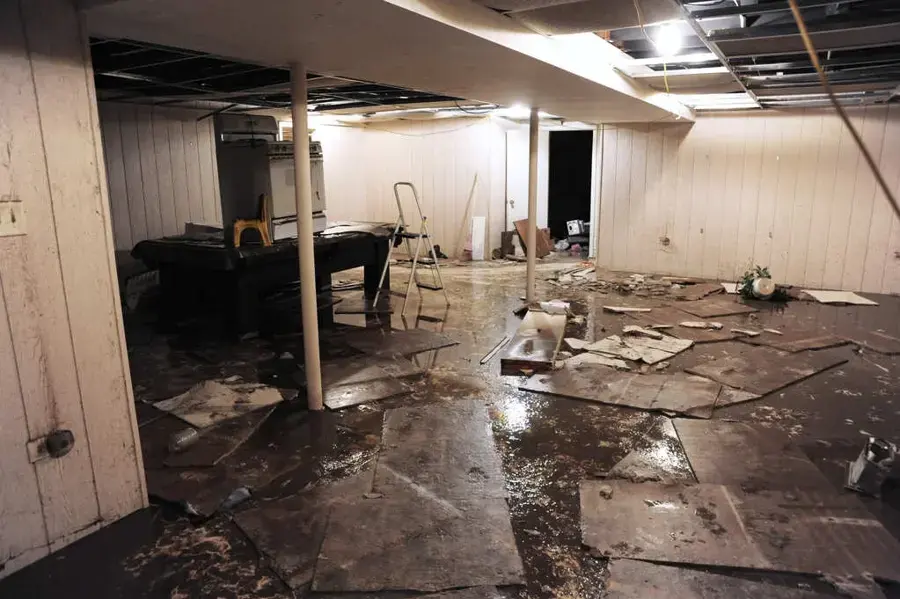
Doraville has no shortage of ranch and split-level homes from the 1950s through the 1970s, and any of them with a finished lower level can take water there first. Gravity sends it to the lowest floor, where carpet, paneling and stored belongings soak it up.
First steps for basement flooding cleanup in Doraville
- 1
Keep off wet stairs
Stay out of standing water near outlets, the furnace and the water heater.
- 2
Cut power only if safe
Turn off lower-level circuits only if the breaker panel stands on a dry floor.
- 3
Mark the water line
Photograph how high the water reached on walls and stored items.
- 4
Move valuables up
Carry boxes, rugs and electronics upstairs before arranging the pump-out.
What does basement flooding cleanup cost in Doraville, GA?
Basement flooding cleanup in Doraville, GA typically costs $1,500 to $20,000. The water category, how much floor got wet, whether the level is finished and how soon drying starts decide the figure.
Unfinished, clean water
- Water pumped and extracted
- Fans and one dehumidifier
- Daily moisture log
Finished lower level
- Carpet and pad removed
- Short flood cuts if needed
- Cavity drying
Large or contaminated
- Sanitizing protocol
- Porous items discarded
- Desiccant units on block
Ranges are typical, not a quote: category of water, square footage, material class and how fast drying started move the number most. Run the water damage cost calculator for a closer range.
How basement flooding cleanup is handled in Doraville
The tech who does the walkthrough maps moisture before any equipment goes down, so the drying plan matches what is actually wet. Equipment stays until the readings say dry, not until it looks dry.
- 1
Pump the room down
Standing water is pumped off, then carpet and pad are squeezed with weighted wands.
- 2
Find the hidden wet
A thermal camera and meters check the paneling, drywall, bottom plates and the slab.
- 3
Cut only what is wet
Flood cuts and insulation removal happen where the readings point.
- 4
Dry the block, wood and slab
Dehumidifiers and air movers run until each material meets the dry reference.
How a lower level ends up wet
Sources fall into three groups. Heavy rain can push groundwater through wall joints and floor cracks. A failed water heater, a split pipe or a washer hose can empty into the room from inside. And a drain backing up can send dirty water across the floor. Each calls for a different cleanup, so the first job is identifying the water.
- Rain and groundwater seeping through walls or the floor edge.
- Plumbing and appliance failures releasing clean water from above.
- A pump or drain that fails during a storm; see sump pump failure cleanup.
Drying a flooded lower level
The extraction crew pumps the standing water first, then presses out carpet and pad. Finished walls hide moisture, so the walkthrough tech scans paneling and drywall with a thermal camera and meters before choosing where to cut. A short flood cut along the bottom of a wall is often all it takes. Concrete and block dry slowly, so low-grain dehumidifiers run beside the air movers.
- Groundwater is usually Category 2; water that crossed the yard can be Category 3.
- Soaked insulation behind finished walls is removed because it will not dry where it sits.
- Meters are read daily until wall, framing and slab reach the dry reference.
Preventing a repeat
Once the room is dry, the best changes happen outside: longer downspout extensions, soil that slopes away from the foundation and a pump discharge kept clear. The seepage risk check walks through each point. Seepage coverage varies by policy, so ask your own insurer early.
Basement flooding cleanup across Doraville and nearby towns
The restoration team covers ZIP 30340 and 30360, including Oakcliff and Northwoods split-levels, Tilly Mill ranches, Guilford Village and the homes near Flowers Road.
The same service nearby: basement flooding cleanup in Lilburn, Peachtree Corners, Tucker.
Related water damage services in Doraville
Basement Flooding Cleanup questions in Doraville, GA
Why can a lower level flood when no pipe broke?
Heavy rain can saturate the ground and push water through wall joints or floor cracks. That pressure builds in a long storm even when every pipe is sound.
Does the drywall need to come out?
Not always, because meters decide. Clean water caught early can often dry in place, and soaked insulation behind it usually calls only for a flood cut.
How many days does a finished lower level take to dry?
Most take 4 to 7 days, and block walls and concrete slabs hold more water than wood framing, so they can run longer.
Is the floodwater dangerous?
Water that has crossed soil or the yard can carry bacteria and is handled as Category 2 or 3. Children and pets should stay out until the room is cleaned.
Is a store-bought dehumidifier enough?
A household unit eases humidity but cannot keep pace with a flooded room. Restoration-grade units pull far more water every day.
What helps keep the next storm out?
Long downspout extensions, soil sloped away from the house and a working pump with a backup help most in any home that has a lower level.
Water on the lower floor? Get pumping.
Block walls and slabs keep water for days. The drying team begins once the standing water is gone.
(888) 532-4616Doraville lower-level water removal, 24/7