Basement Flooding Cleanup in Peachtree Corners, GA
A hard storm can push water into any lower level, from a finished family room to a bare utility floor. The Peachtree Corners restoration team pumps it out, dries walls, framing and flooring and records every reading.
(888) 532-4616Get the lower level pumped out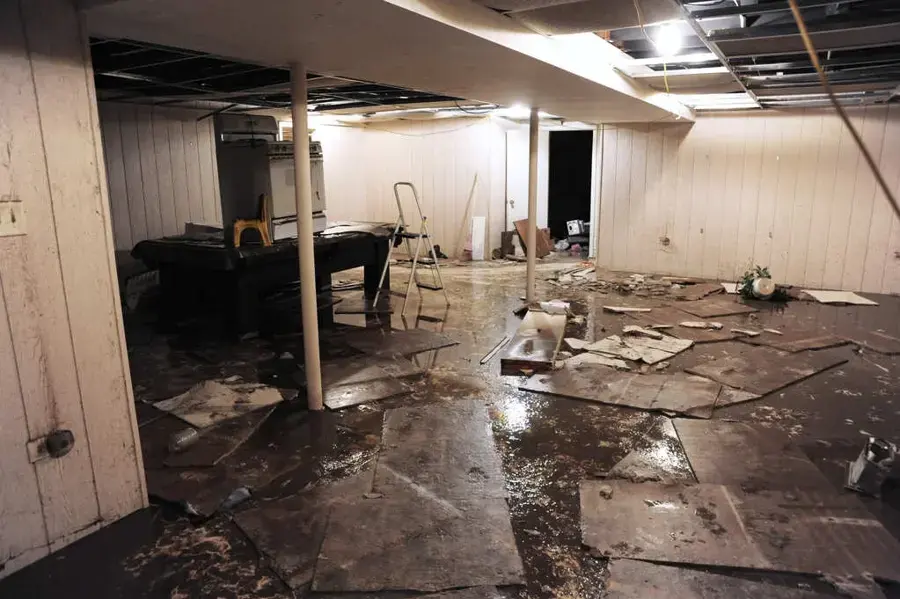
Metro Atlanta showed in September 2009 how fast rain can overwhelm a house: 10 to 20 inches fell in under 24 hours, and Gwinnett County was among the affected counties. Any Peachtree Corners home with a lower level deserves a plan for water arriving from outside.
First steps for basement flooding cleanup in Peachtree Corners
- 1
Stay off wet stairs
Pooled water near plugs, the furnace or the water heater can deliver a shock.
- 2
Shut off wet circuits
Turn off lower-level breakers only if the panel itself stands on dry ground.
- 3
Mark the waterline
Photograph the depth on walls and on stored boxes before anything is shifted.
- 4
Lift what you can
Raise rugs, boxes and electronics out of the water, then call for pumping.
What does basement flooding cleanup cost in Peachtree Corners, GA?
Basement flooding cleanup in Peachtree Corners, GA usually costs $1,500 to $20,000. The deciding factors are the water category, how much floor area got wet, whether the lower level is finished and how quickly drying began.
Unfinished, clean seepage
- Pump-out of the floor
- Fans and one dehumidifier
- Daily meter checks
Finished lower level
- Carpet and cushion pulled
- Flood cuts where meters point
- Wall cavities dried
Large or contaminated
- Category 3 handling
- Porous materials removed
- Desiccant units on block
Ranges are typical, not a quote: category of water, square footage, material class and how fast drying started move the number most. Run the water damage cost calculator for a closer range.
How basement flooding cleanup is handled in Peachtree Corners
The tech who does the walkthrough maps moisture before any equipment goes down, so the drying plan matches what is actually wet. Equipment stays until the readings say dry, not until it looks dry.
- 1
Pump and extract
Standing water is pumped out, then carpet and cushion are pressed with weighted tools.
- 2
Hunt for hidden water
Imaging and meters probe paneling, drywall, sole plates and the slab.
- 3
Cut only where needed
Flood cuts and insulation removal follow the meter numbers.
- 4
Dry the structure
Dehumidifiers and air movers run on block, wood and slab until all read dry.
How storm water finds a lower level
Rain that cannot soak away presses against foundation walls, then enters through floor joints, wall cracks, window wells and stairwell doors. Saturated ground behind a wall builds pressure, so water can fill a lower level while every pipe is intact. The city's Stormwater Management Program shapes how new development handles runoff, yet it cannot stop a downpour from loading the ground around the footings.
- Downspouts that empty beside the house soak the ground along the foundation.
- Concrete and block hold water inside and go on seeping after the rain ends.
- A pump that fails, or an outage during the storm, lets seepage collect into a pool; see sump pump failure cleanup.
Drying a flooded lower level
Pumping removes the pooled water first, and carpet and cushion are extracted next. Finished spaces hide water behind paneling, trim and drywall, so thermal imaging and meters decide where a short flood cut at the bottom of a wall is worth making instead of a full tear-out. Concrete and block dry slowly, which is why low grain dehumidifiers run beside air movers, with desiccant units added for the densest materials.
- Ground seepage is usually Category 2, while water that has run across a lawn or driveway may be classed Category 3.
- Wet insulation inside finished walls is discarded, since it cannot dry in the cavity.
- Readings repeat daily until the wall, framing and slab hit the dry sample.
Heading off the next downpour
When the space is dry again, the best fixes are outdoors: longer downspout extensions, soil sloped away from the walls and a clear path for pump discharge. The seepage risk check lists these weak points. Water arriving at ground level typically falls under flood coverage, so ask your own insurer what applies, and see storm and flood cleanup for water that comes in at ground level.
Basement flooding cleanup across Peachtree Corners and nearby towns
The Peachtree Corners restoration team covers ZIP 30092, 30071, 30096, 30097 and 30360, including homes near Peachtree Station, Chattahoochee Station and Spalding Corners and along Medlock Bridge Road.
The same service nearby: basement flooding cleanup in Lilburn, Doraville, Duluth.
Water damage restoration in Peachtree Corners · every town covered
Related water damage services in Peachtree Corners
Basement Flooding Cleanup questions in Peachtree Corners, GA
Can a lower level flood without a broken pipe?
Yes. Saturated ground pushes water through floor joints and wall cracks during heavy rain, so the plumbing can be perfectly fine while the floor is under water.
Is the drywall a total loss?
Not necessarily, since moisture meters make the call. Clean water caught quickly often dries inside the wall, and a low cut usually handles soaked insulation behind it.
How many days does a flooded lower level take to dry?
Finished spaces commonly need four to seven days. Concrete and block store more water than studs do, so expect them to take longer.
Is the water safe to touch?
Water that ran over soil or a lawn can carry bacteria and is graded Category 2 or 3, so keep kids and pets away until it is pumped out and cleaned.
Will a store-bought dehumidifier be enough?
A retail dehumidifier handles ordinary humidity, not a soaked floor. Restoration units remove many times more water each day and are sized to the room.
Does Peachtree Corners map flood risk?
The city keeps a floodplain map of Special Flood Hazard Areas, yet over 25% of flood claims come from outside high-risk zones. A lower level can take on water even when the map shows no hazard.
Water downstairs? Get the pumping started.
Block and slab hold water for days, so drying begins right after the last of the pooled water is out.
(888) 532-4616Peachtree Corners lower-level drying, 24/7