Basement Flooding Cleanup in Duluth, GA
Where a Duluth house has a lower level, heavy rain and failed drains send water to it first. The restoration team pumps the space out, dries walls and flooring and documents each reading.
(888) 532-4616Get the lower level pumped out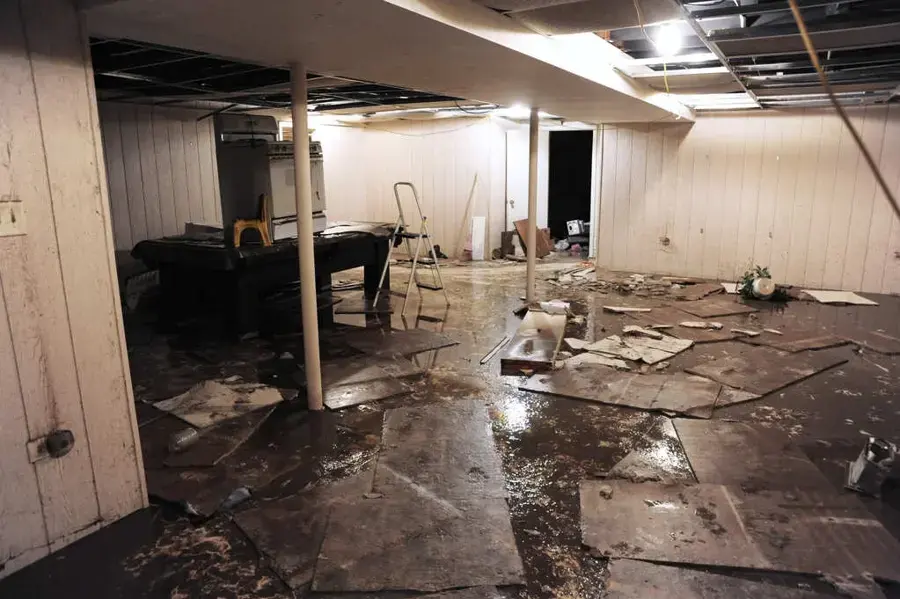
Not every Duluth house has a basement, but where one exists it sits at the bottom of every drainage path on the lot. Heavy Georgia rain, a failed pump or a backed-up drain all end the same way, with water across the lowest floor of the home.
First steps for basement flooding cleanup in Duluth
- 1
Stay off wet stairs
Keep out of standing water near outlets, a furnace or a water heater until the power is confirmed off.
- 2
Cut basement power
Switch off lower-level breakers only when the panel stands in a dry spot.
- 3
Mark the water level
Photograph the depth on walls and on anything stored before it is moved.
- 4
Move belongings up
Carry boxes, rugs and electronics to higher ground, then call for the pump-out.
What does basement flooding cleanup cost in Duluth, GA?
Expect basement flooding cleanup in Duluth to land somewhere between $1,500 and $20,000. Water category, the finished area that got wet, built-out walls and the delay before pumping all move the total.
Bare concrete, rain seepage
- Water pumped down
- Drying fans running
- Meter checks each day
Carpeted, finished space
- Pad squeezed and removed
- Low flood cuts
- Wall bays opened and dried
Big loss or dirty water
- Sewage-grade protocol
- Soaked finishes hauled out
- Desiccant units on block
Ranges are typical, not a quote: category of water, square footage, material class and how fast drying started move the number most. Run the water damage cost calculator for a closer range.
How basement flooding cleanup is handled in Duluth
The tech who does the walkthrough maps moisture before any equipment goes down, so the drying plan matches what is actually wet. Equipment stays until the readings say dry, not until it looks dry.
- 1
Pump down
Standing water is pumped and extracted, then wet carpet and pad are pressed out.
- 2
Look behind finishes
Thermal imaging and meters check paneling, drywall, bottom plates and the slab for hidden water.
- 3
Cut only where wet
Short flood cuts and insulation removal happen only where the readings send the crew.
- 4
Dry masonry and wood
Dehumidifiers and air movers run until block, framing and slab agree with a dry reference.
How water reaches a lower level
Rain that cannot soak in runs toward the foundation and presses through joints, cracks and window wells. Indoors, a drain that backs up pushes water out of the lowest opening, and a pipe that fails upstairs sends water down through the floor above. Each route leaves a different kind of water, and the source decides how it is treated.
- Rain and groundwater seeping through walls and floor joints, usually gray water.
- Drain water coming up through a floor drain, handled as black water.
- Clean supply water from a pipe or tank above, which dries in place more often.
What Gwinnett County advises for low fixtures
Gwinnett County recommends a sanitary backwater device when the lowest plumbing fixture sits below grade of an upstream manhole. Without one, a surge in the county sewer can climb up through a basement bath or floor drain. The sewer lateral from the house to the right-of-way connection belongs to the owner, which is worth knowing before a backup rather than after.
How a flooded basement gets dried
The extraction crew pumps out standing water, then presses out carpet and pad. Finished walls can hide water, so meters and thermal imaging decide where a short flood cut is needed. Wet insulation comes out, and dehumidifiers run beside air movers because concrete and block release moisture slowly.
- Daily readings continue until wall, framing and slab agree with a dry reference.
- Contaminated water means porous finishes are removed rather than dried.
Keeping the next storm out
Outside changes help most: longer downspout runs, soil sloping away from the wall and a clear sump discharge. The seepage risk check lists the weak points, and sump pump failure cleanup covers an overflowing pit.
Basement flooding cleanup across Duluth and nearby towns
The Duluth restoration team covers ZIP 30096 and 30097, including the Sugarloaf Country Club and Lakes at Sugarloaf communities, Village at Albion Farm and the homes around Rogers Bridge Park.
The same service nearby: basement flooding cleanup in Lilburn, Peachtree Corners, Doraville.
Related water damage services in Duluth
Basement Flooding Cleanup questions in Duluth, GA
Can a basement flood without a burst pipe?
Yes. Heavy rain can press water through wall joints, window wells and floor cracks, and a backed-up drain can push it up from below. Plumbing does not have to fail for a lower level to flood.
Does the drywall always come out?
No. Readings decide. Clean water caught early can often dry in place, and where insulation behind the wall is soaked, a short cut near the floor is usually enough to open it up.
How long does a lower level take to dry?
Most finished lower levels dry in 4 to 7 days. Concrete and block hold more water than wood framing, so the slab and masonry walls can set the pace.
What is a sanitary backwater device?
Gwinnett County recommends one when the lowest plumbing fixture sits below grade of an upstream manhole. It is meant to stop sewer water from rising into the house through that fixture.
Is basement floodwater safe to touch?
Water that crossed yard or street surfaces can carry bacteria and is treated as Category 2 or 3. Keep children and pets out until it is extracted and the surfaces are cleaned.
Who is responsible if a sewer backup floods the lower level?
Gwinnett County puts maintenance of the sewer lateral on the property owner, up to the connection in the right-of-way. A backup often needs its own insurance endorsement, so ask your insurer.
Water in the lowest level? Start the pump-out.
Masonry and slab keep water for days, so the drying team sets equipment as soon as the standing water is gone.
(888) 532-4616Duluth basement drying, 24/7