Commercial Water Damage Restoration in Duluth, GA
When water reaches an office, restaurant or hotel wing, every closed hour costs money. The commercial team pulls the water out, walls off the wet zone and dries in stages, so the rest of the property keeps working.
(888) 532-4616Start the commercial dry-out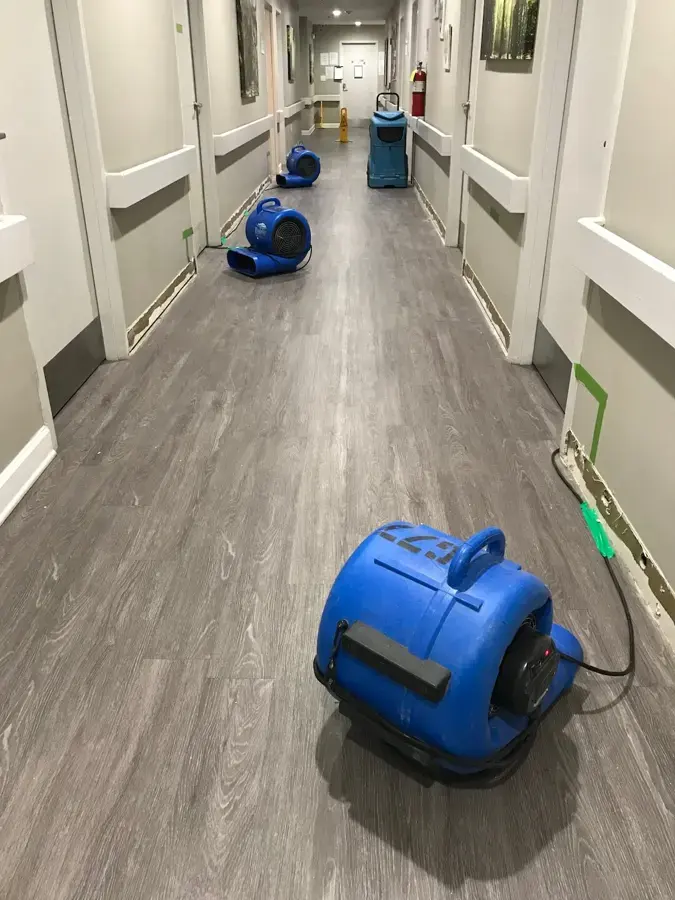
Duluth mixes office parks, restaurant and retail plazas, hotels and apartment communities, and downtown Parsons Alley alone holds about 31,000 square feet of restaurant and retail space. A water loss in any of them has the same goal: stop the water, dry the building and keep as much of it open as possible.
First steps for commercial water damage in Duluth
- 1
Stop the flow
Close the riser valve for sprinkler water or the main for a supply pipe, and let the alarm monitoring company know.
- 2
Clear people and records
Staff, files and electronics move out from under wet ceilings and away from wet floors.
- 3
De-energize wet zones
Only where that is safe and leaves life-safety systems running.
- 4
Keep a timeline
Note when it started, where it came from and which suites were hit.
What does commercial water damage cost in Duluth, GA?
A commercial water loss in Duluth usually lands between $3,000 and $100,000 or more. Square footage, the water category, the count of affected suites or floors and the delay before drying all move the total.
A single suite
- Pump-out
- Tile and carpet drying
- Daily logs
Several suites or a corridor
- Sealed work zones
- Drop ceiling tiles out
- Staged drying
An entire building or black water
- Air scrubbing throughout
- Bulk tear-out
- Overnight drying shifts
Ranges are typical, not a quote: category of water, square footage, material class and how fast drying started move the number most. Run the water damage cost calculator for a closer range.
How commercial water damage is handled in Duluth
The tech who does the walkthrough maps moisture before any equipment goes down, so the drying plan matches what is actually wet. Equipment stays until the readings say dry, not until it looks dry.
- 1
Zone the damage
Meters sort wet areas from dry, and plastic walls keep dry parts in use.
- 2
Pump, then cut selectively
Water is extracted, and soaked tile and drywall come out only where readings call for it.
- 3
Dry on a night schedule
Quiet dehumidifiers and air movers run around opening hours.
- 4
Hand over the data
Daily readings and photos reach owners, managers and adjusters.
Where commercial water losses start
Sprinkler heads get struck or freeze, roofs leak over drop ceilings, supply pipes let go, tenant water heaters fail and restrooms overflow. Strip centers, offices and hotels all see these, and in a building with several tenants, water from one suite can leak into the neighboring suite.
- A pipe or sprinkler failure discovered after a weekend.
- Roof water landing on drop ceilings and inventory.
- Restroom overflows and sewer backups; see sewage backup cleanup.
Drying a business without shutting it
Keeping the doors open comes from planning in phases. Plastic walls seal off the wet zones, HEPA filtration keeps dust out of working areas, and quiet high-capacity dehumidifiers can run overnight where noise is a concern. Tiles, carpet tile and drywall are removed only where meters point, and each day's readings are shared with owners and managers.
- A dining room or reception desk can stay open behind containment.
- Restrooms and other black-water areas are sealed and treated first.
- Photos and daily logs reach the owner and property manager.
Records for owners, tenants and managers
Several parties means a larger file: a moisture map, daily logs, dated photos from before removal and an itemized scope. The lease usually decides who covers what, so owners and tenants should each raise it with their own insurer. For the equipment side, see the structural drying page.
Commercial water damage across Duluth and nearby towns
Commercial work reaches ZIP 30096 and 30097, including Downtown Duluth and Parsons Alley and the Buford Highway, Sugarloaf Parkway, Peachtree Industrial Boulevard and Satellite Boulevard corridors.
The same service nearby: commercial water damage in Lilburn, Peachtree Corners, Doraville.
Related water damage services in Duluth
Commercial Water Damage questions in Duluth, GA
Can the doors stay open while the building dries?
Often. Plastic walls, air scrubbers and overnight equipment keep unaffected areas in use.
Who gets the paperwork?
Owners, managers and adjusters all get the same moisture map, daily numbers and pictures, so no one works from a different version.
Is sprinkler water safe?
It starts clean but picks up residue on its way out of old pipes, so it is pulled out fast and any ceiling or insulation it touched is checked.
How long does a business dry-out run?
A single suite often takes 3 to 5 days. Bigger staged jobs and black-water areas take longer.
Does a hotel or apartment building get a different plan?
The method stays the same, but work is sequenced by wing, floor or unit so occupied rooms stay usable where possible.
Whose insurance covers a tenant's space?
Who pays depends on the lease and on each party's policy, so owners and tenants should each ask their own insurer early.
Business flooded? Start the dry-out.
Closing even a day costs money, so the work is staged to keep doors open wherever possible.
(888) 532-4616Duluth commercial water damage, 24/7