Structural Drying and Dehumidification in Duluth, GA
Surfaces that feel dry can still hold water in the studs and subfloor, and Georgia humidity slows evaporation. The Duluth drying team sets equipment to each room and keeps it running until the readings match a dry sample.
(888) 532-4616Get the structure dried properly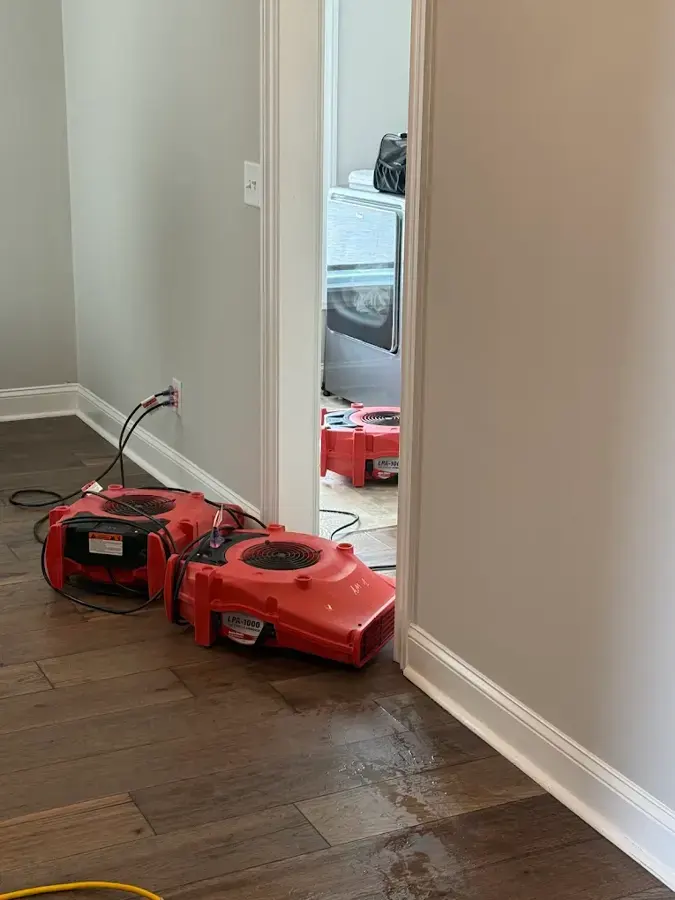
Structural drying decides whether a Duluth house stays sound after a water loss. Framing, subfloor, drywall and slab keep water long after the surface looks fine, and humid Georgia air makes natural drying slow.
First steps for structural drying and dehumidification in Duluth
- 1
Keep the cool air going
Leave the air conditioning running; it removes moisture as it cools, except after a loss with contaminated water.
- 2
Open what is closed
Open closets, cabinet doors and drawers so air can reach wet spaces.
- 3
Wait on the finishing work
Hold off on paint, trim and new flooring until readings say dry.
- 4
Do not unplug the equipment
Fans and dehumidifiers stay running until the drying team takes them out.
What does structural drying and dehumidification cost in Duluth, GA?
Structural drying in Duluth usually runs between $800 and $15,000. Loss class, floor area, the share of hardwood, plaster or block involved and the speed of the start all shift the figure.
One area, light loss
- Air movers placed
- One LGR unit
- Readings every day
Several rooms or a level
- Wall cavity airflow
- Drying mats on hardwood
- Humidity logs
Dense materials or whole house
- Desiccant drying units
- Plastic containment
- Extra monitoring days
Ranges are typical, not a quote: category of water, square footage, material class and how fast drying started move the number most. Run the water damage cost calculator for a closer range.
How structural drying and dehumidification is handled in Duluth
The tech who does the walkthrough maps moisture before any equipment goes down, so the drying plan matches what is actually wet. Equipment stays until the readings say dry, not until it looks dry.
- 1
Survey the building
A meter and thermal camera chart wet materials, and a dry sample sets the target.
- 2
Match gear to the room
Each room's loss class decides how many air movers and which dehumidifier it gets.
- 3
Write the numbers down
Material and humidity readings are recorded every day.
- 4
Pull equipment on proof
Gear comes out only once materials sit within 2 to 4 points of that sample.
How drying gets measured
Each job starts with a reading from a dry material in a room the water never reached. Wet materials are then dried until they settle within 2 to 4 points of that sample, and daily temperature and humidity readings show whether the air is truly pulling moisture out. A room can feel fine to the hand and still read wet to the meter. IICRC S500 is the standard behind the method.
- A loss class from 1 to 4 tells the crew how much equipment each room needs.
- Air movers are placed to match each room's evaporation load.
- Each day's numbers become part of the claim file.
Equipment and when each kind is used
LGR dehumidifiers condense water out of warm, humid air at a high rate, which counts in a Georgia summer where July averages about 78.3 degrees Fahrenheit. Desiccant units take over for tight materials like hardwood, plaster, masonry and concrete. In-wall systems blow dry air into closed cavities, and floor mats draw water up through boards.
- Gear stays until the readings say dry, not until the surface feels dry.
- Plastic containment can shrink the area being dried so equipment concentrates on the wet rooms.
- Crawl spaces and under-house areas have their own plan on the crawl space water damage page.
The cost of switching off early
Shutting the equipment off while studs and subfloor are damp leaves water behind, and it returns as cupped floors, peeling paint, odor and mold. Because the readings are written down, the end of the job is a number, not an opinion. Once the free water is out through water extraction, drying takes over, and the last set of readings is filed with the claim.
Structural drying and dehumidification across Duluth and nearby towns
Drying crews work ZIP 30096 and 30097, from Downtown Duluth and Parsons Alley to Sugarloaf Country Club, Lakes at Sugarloaf and the Sugarloaf Parkway corridor.
The same service nearby: structural drying and dehumidification in Lilburn, Peachtree Corners, Doraville.
Related water damage services in Duluth
Structural Drying and Dehumidification questions in Duluth, GA
What is the S500 standard actually asking for?
A moisture map, equipment sized to the loss class, daily readings and a stopping point set by a dry sample.
Why does the equipment stay after the room feels dry?
Studs, subfloor and slab release water slowly. The gear stays until the meters, not the touch test, show that hidden water is gone.
How is an LGR dehumidifier different from a store-bought one?
It removes far more water per day from humid air, which matters when summer air is already damp.
When does a desiccant unit make sense?
When the material is tight, like hardwood, plaster or concrete, or when cool air makes refrigerant dehumidifiers sluggish.
How long should drying take?
Plan on roughly 3 to 5 days for a small, contained Class 1 or 2 loss, with hardwood, plaster or damage across several floors adding more.
May I switch the equipment off at night?
No. Drying depends on steady airflow, so a night off stalls progress and can add days.
Need the structure dried to standard? Call now.
A floor can feel dry while the framing beneath it is still wet, so the equipment stays until the meters agree.
(888) 532-4616Duluth structural drying, 24/7